For publishers with high-volume, unsegmented traffic—such as social media networks, file-sharing platforms, search apps, and digital utility portals—achieving consistent monetization can feel like an uphill battle. Managing and optimizing traffic containing hundreds of different cellular networks (MNOs), varying device types, and geographically dispersed user intents is a resource-intensive challenge.
A static offer routing system or a standard, weight-based split test often fails here. If a mobile user on a 3G network in Brazil lands on a high-end desktop offer, the chance of conversion is next to zero, causing a lost click and wasted ad spend. On the other hand, if that same visitor is automatically routed to a localized 1-click mobile carrier billing offer, they are highly likely to convert on the spot.
This is where AI-driven Smartlink technology becomes essential. In this guide, we’ll look at the technical mechanics behind GTaro Ads Smartlinks: how they inspect incoming session data, use machine learning algorithms to evaluate paths, and route every user to the highest-converting offer in under 50 milliseconds.
1. The Fragmentation Challenge: Why Static Offer Rotators Fail
Traditional monetization relies on static, rule-based traffic distribution. A media buyer or publisher might configure their tracker with fixed percentage weights (e.g., Offer A: 50%, Offer B: 50%) or basic geographic redirects.
While this may work for highly targeted campaigns, it cannot handle the sheer variety found in broad mobile and social traffic streams.
[STATIC ROTATOR: Fixed Allocation]
Incoming Mixed Traffic ──► Fixed 50/50 Split ──┬──► Offer A (Credit Card Flow) ──► 85% Bounce (No CC)
                                               └──► Offer B (Desktop Target)   ──► 90% Mismatch (Mobile Tier-3)

[AI SMARTLINK ENGINE: Dynamic Impression Routing]
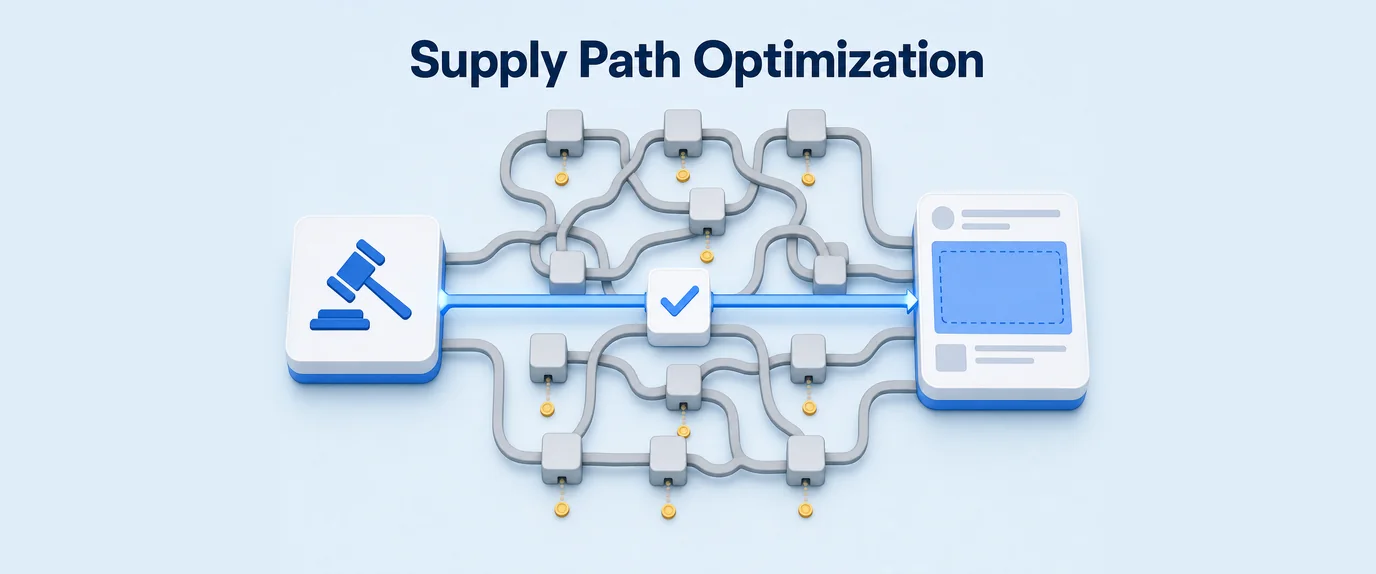
Incoming Mixed Traffic ──► Edge Signal Parser ──► MAB ML Engine ──► Optimal Matching Offer ──► Maximum eCPM
Critical Bottlenecks of Static Distribution:
- The Payment Rail Mismatch: In developing regions (such as LATAM, SEA, and MENA), credit card penetration is often under 20%. Forcing credit-card checkouts on mobile carrier traffic kills conversions. Conversely, routing Tier-1 desktop traffic to low-payout carrier billing offers wastes high-purchasing-power users.
- Latency-Induced Churn: Traditional multi-tier redirect chains through intermediary tracking servers add 400 to 1,200 milliseconds of latency. In mobile networks, every 200ms of delay increases bounce rates by 5% to 8%.
- Stale Offer Fatigue: Individual affiliate offers face sudden conversion dips due to cap exhaustion, advertiser budget limits, or degraded merchant processing gateways. Static rotators continue sending traffic to dying offers until a human operator intervenes.
2. Real-Time Multi-Signal Ingestion: 20+ Session Parameters Analyzed At The Edge
To make optimal routing decisions in milliseconds, the GTaro Ads Smartlink doesn’t just look at a user’s country. It dissects the HTTP request, TCP connection metadata, and client-side device characteristics.
A. Network & Carrier Identification
┌────────────────────────────────────────────────────────────────────────┐
│                   Real-Time Edge Signal Ingestion                      │
│                                                                        │
│  [Incoming HTTP Request]                                               │
│            │                                                           │
│            ├── Network Vector: ASN, IP Range, MNO/Carrier, 4G/5G/Wi-Fi │
│            ├── Device Vector:  OS Build, WebGL GPU, RAM, Screen Ratio  │
│            └── Context Vector: Referrer Depth, Locale, In-App Browser  │
│                                                                        │
│  Output: Deterministic Session Profile passed to ML Routing Engine     │
└────────────────────────────────────────────────────────────────────────┘
The Smartlink platform parses a series of deep telemetry data at the network’s edge:
- Autonomous System Number (ASN) & IP Mapping: Instantly identifies whether the visitor is on a residential ISP, commercial datacenter, public proxy, or cellular mobile carrier.
- Mobile Network Operator (MNO) Detection: Isolates specific cellular carriers (e.g., Claro, Vodafone, Telkomsel) to immediately match against direct carrier billing (DCB) and mobile content contracts.
- Connection Profile: Identifies the user’s current connection speed (Wi-Fi vs. 3G/LTE) to determine whether to display a feature-rich interactive lander or a lightweight, fast-loading version.
B. Hardware & Device Telemetry
- User-Agent Client Hints (UA-CH): Extracts granular operating system versions, architecture, and platform models without relying on deprecated raw User-Agent strings.
- Hardware Capabilities: Evaluates client device memory (
navigator.deviceMemory), CPU cores (navigator.hardwareConcurrency), and screen aspect ratios to separate low-end budget smartphones from flagship devices.
C. Contextual & Behavioral Vectors
- In-App Browser (IAB) Detection: Detects whether the visitor is viewing content inside embedded webviews (such as Telegram, TikTok, Instagram, or Facebook webviews) where native cookie access, file downloads, or external app switching may be restricted.
- Locale & Language Matching: Cross-references browser system language with geographic IP location to serve culturally and linguistically aligned copy.
3. Real-Time Algorithmic Routing: Multi-Armed Bandit (MAB) vs. Static Weighting
The core engine of a Smartlink is its mathematical allocation algorithm. Standard A/B testing allocates fixed proportions of traffic (e.g., 50/50) across the entire test period, incurring an Opportunity Cost by repeatedly serving underperforming offers to valuable traffic.
Smartlinks solve this using Multi-Armed Bandit (MAB) frameworks, which balance the exploration of new or untested offers with the exploitation of known, high-converting winners.
                                  ┌──► Exploit High-Yield Offer (85% Traffic Allocation)
[MAB Optimization Engine] ────────┼──► Explore Challenger Offer A (10% Traffic Allocation)
                                  └──► Test New Addition Offer B  (5% Traffic Allocation)
1. The Epsilon-Greedy (\epsilon-Greedy) Strategy
The system allocates a large percentage of traffic (1 – \epsilon, typically 85–90%) to the historically highest-performing offer cluster (Exploitation). The remaining percentage (\epsilon, typically 10–15%) is distributed randomly across challenger offers (Exploration). As soon as a challenger’s performance outpaces the control, the engine dynamically shifts the exploitation budget.
2. Thompson Sampling (Bayesian Optimization)
Advanced Smartlink platforms deploy Thompson Sampling, treating conversion rates not as fixed numbers, but as dynamic Beta probability distributions:
$$\text{Beta}(\alpha, \beta)$$
Where:
- \alpha represents successful conversions.
- \beta represents failed impressions / non-converting visits.
For every incoming impression matching a specific cluster profile (e.g., Android + Brazil + Claro + In-App Webview), the engine samples each offer’s probability distribution and selects the arm with the highest simulated return:
$$\text{Expected Value} = \text{Predicted CTR} \times \text{Predicted CR} \times \text{Offer Payout}$$
This allows the Smartlink to adapt within minutes to live market changes—such as an advertiser running out of budget or a competitor saturating an offer—without human intervention.
4. Sub-50ms Global Routing via Serverless Edge Infrastructure
In digital advertising, speed directly impacts conversion rates. Routing global users back to a central database server introduces ping delays of 200–500ms, which can cause visitors to drop off.
To prevent this, GTaro Ads relies on Serverless Edge Compute (via nodes such as Cloudflare Workers or AWS Lambda@Edge) to make routing decisions right next to the visitor.
[User in Tokyo] ──► [Edge Worker (Tokyo PoP)] ──► Local KV Cache Read (<2ms) ──► Instant 302 Redirect
                                                        ▲
                                                        │ Async Sync
                                                        ▼
                                            [Central ML Training Hub]
Edge-Acceleration Architecture:
- Edge Key-Value (KV) Caching: Pre-computed offer matches and performance weights are cached directly on edge servers across hundreds of points-of-presence globally. Reads happen in less than 2 milliseconds.
- Single-Hop HTTP 302/307 Redirection: Rather than using client-side JavaScript redirects—which force browsers to download and paint HTML—the serverless function replies with instant
302 Foundor307 Temporary Redirectheaders, eliminating loading delays. - Server-to-Server (S2S) Token Forwarding: Client identifiers and click tokens (
click_id,subid) are injected directly into the target URL on the fly, while impression data is logged in the background without holding up the redirect.
5. Key Use Cases: Harnessing Unruly Traffic
A well-optimized Smartlink excels at capturing value from three highly fragmented traffic sources:
A. Telegram and Messenger Traffic
- The Challenge: Millions of clicks are generated through social bio links, chat groups, and channel bots. Users typically visit inside embedded in-app browser viewviews (where cookies are often blocked) and are globally dispersed.
- The Smartlink Solution: By identifying the chat webview environment, the Smartlink avoids external app-store requirements and routes users to low-friction mobile subscription services, gaming apps, or local lead-generation campaigns.
B. Fallback and Exit-Intent
- The Challenge: Visitors leaving a landing page, clicking back, or hitting dead-ends represent lost opportunities.
- The Smartlink Solution: The engine can capture back-button events and exit intent, instantly routing natural drop-offs to a relevant fallback offer.
C. Large-Scale File and Utility Portals
- The Challenge: High-volume file hosts, PDF tools, or entertainment networks are visited by diverse global desktop and mobile audiences with varied intent.
- The Smartlink Solution: The Smartlink automatically separates premium Tier-1 desktop users (routing them to high-RPC search or subscription offers) from emerging-market mobile traffic (directing them to carrier-integrated mobile utilities).
6. Real-World Performance: Dynamic vs. Static Methods
Data compiled across high-volume campaigns demonstrates the conversion and eCPM uplift achieved when shifting from manual or static routing to an automated, edge-optimized AI Smartlink:
| Performance Metric | Static 50/50 Split Rotator | Rule-Based Manual Geo-Links | AI Smartlink Engine (MAB + Edge) |
|---|---|---|---|
| Global Mixed Traffic eCPM | $1.20 Baseline | $2.45 (+104%) | $4.85 (+304% Lift) |
| Average Redirect Latency | 480ms – 1,100ms | 350ms – 650ms | < 45ms (Edge Processed) |
| Traffic Wastage (Unmatched Offers) | 38.5% of Clicks | 14.2% of Clicks | < 0.5% (Universal Coverage) |
| Offer Cap Failure Rate | High (Manual Monitoring) | Moderate (Requires Rules) | Zero (Automated Fallback) |
| Mobile Carrier (DCB) Conversion Rate | 1.1% | 3.8% | 9.4% (Direct MNO Matching) |
| Manual Media Buyer Overhead | 15+ Hours / Week | 8 Hours / Week | Zero (Fully Autonomous) |
7. Operational Deployment & Integration Checklist
Ready to deploy? Follow this roadmap to implement and scale Smartlink monetization across mixed traffic portfolios:
- [ ] Configure Clean DNS Routing: Point your custom tracking domain to edge-accelerated CDN nameservers (Cloudflare, AWS Route 53) to minimize TLS handshake latency.
- [ ] Implement Client Hints Capture: Ensure web pre-landers or edge endpoints request high-entropy Client Hints (
Sec-CH-UA-Model,Sec-CH-UA-Platform-Version) for granular OS targeting. - [ ] Set Up Upstream Postback Tracking: Ensure your affiliate network and DSP connections return real-time Server-to-Server (S2S) postbacks with revenue values to feed the Thompson Sampling algorithm.
- [ ] Define Offer Pool Fallbacks: Group offers into dedicated fallback tiers (Primary Tier-1 CPA \rightarrow Secondary DCB/mVAS \rightarrow Global Monetization Smartlink) to prevent dead-end impressions.
- [ ] Configure Back-Button Trapping: Integrate lightweight
pushStatescripts on high-bounce pre-landers to route exiting users directly into the Smartlink monetization loop. - [ ] Audit Carrier Range Accuracy: Regularly refresh IP-to-MNO routing databases to prevent misrouting cellular traffic to non-carrier payment gateways.
Monetizing complex, unsegmented traffic requires moving beyond rigid, manual campaign routing. By utilizing AI Smartlink architecture—integrating sub-50ms edge processing, comprehensive 20-signal session evaluation, and self-optimizing Multi-Armed Bandit algorithms—publishers and media buyers eliminate traffic waste, maximize carrier-level monetization, and achieve superior eCPMs across all channels.