In 2026, classic banner advertising is undergoing a “silent revolution.” We used to fight for maximum visibility; today, the winner is the one who hides best. Not by being invisible, but by being organic.
Let’s explore how Generative UI (Gen-UI) technologies have transformed annoying “rectangles” into functional, high-value site elements.
1. Visual Mimicry: Programmatic UI Technology
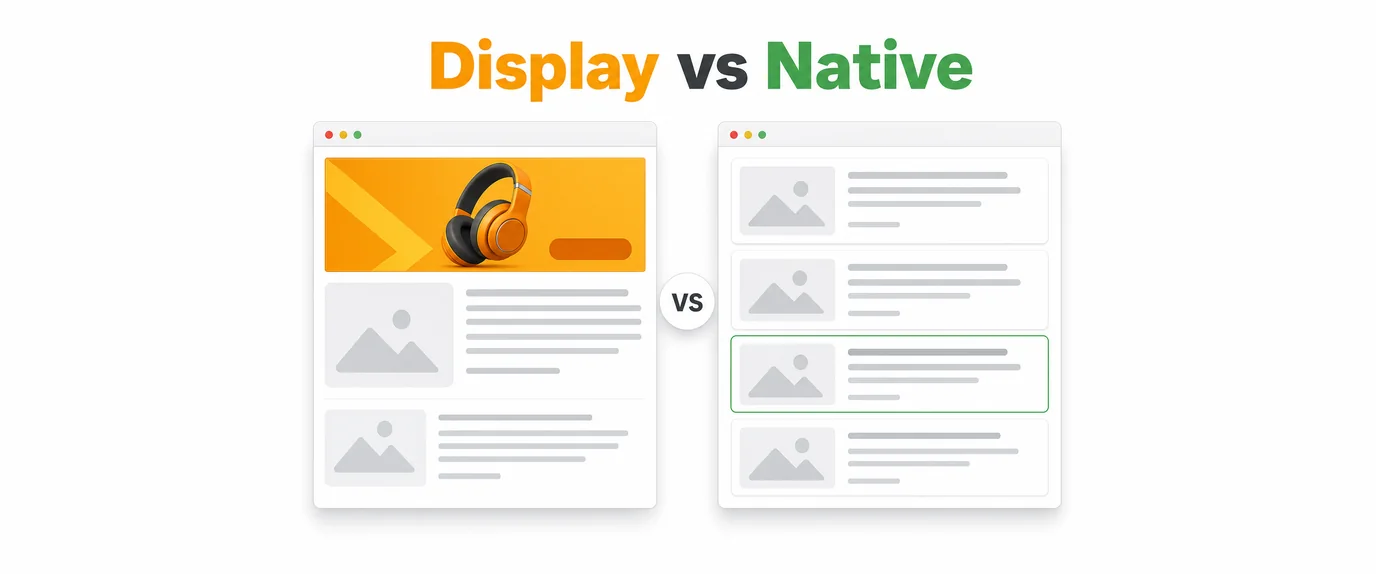
The fundamental problem with banners has always been their “foreignness.” The human brain instantly identifies a bright, mismatched spot as an advertisement and instinctively ignores it.
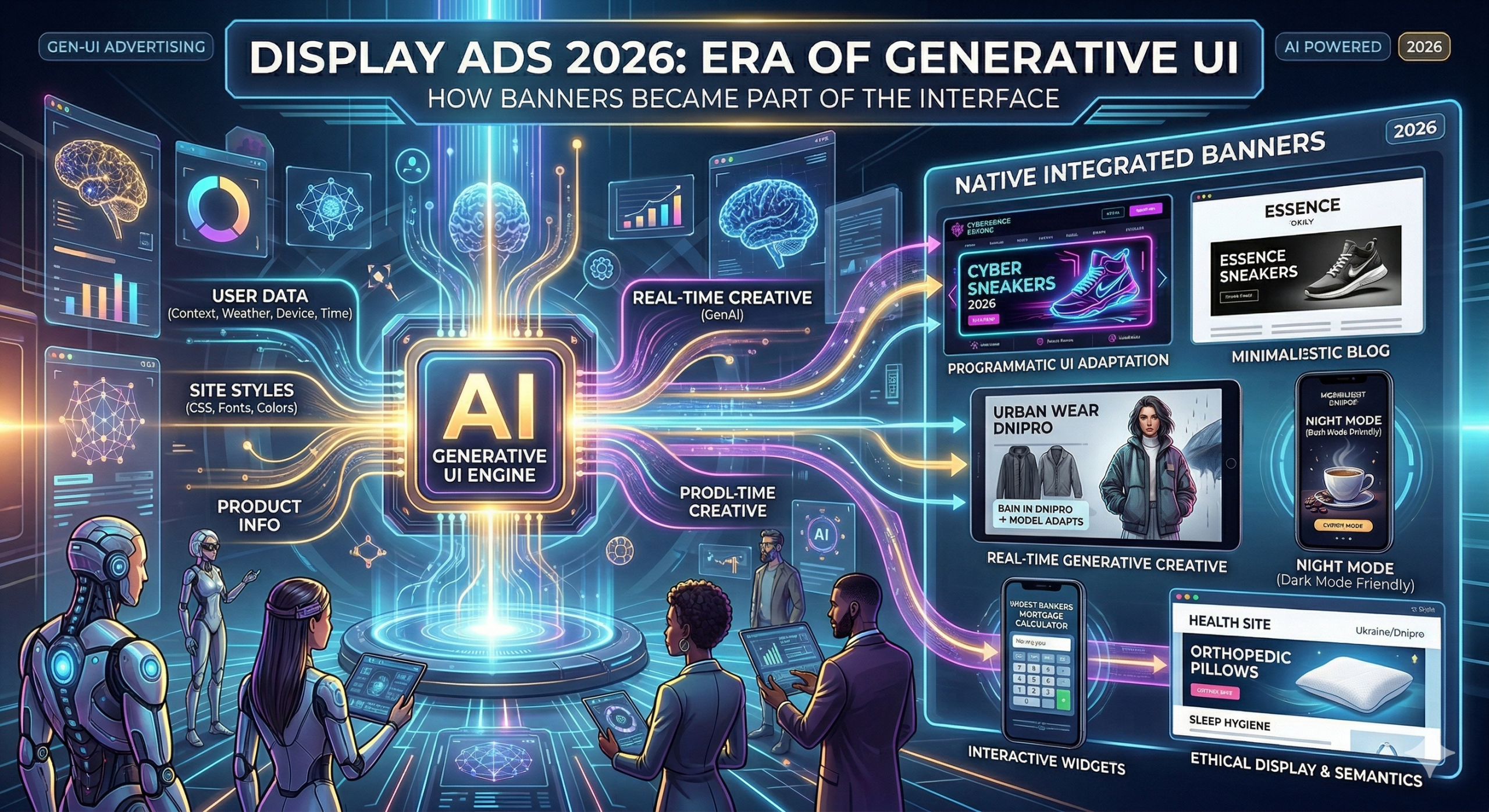
The 2026 Solution: Modern display networks now use scripts that read the publisher’s site styles (CSS) in real-time.
- Minimalist Blog: The banner automatically switches to black-and-white with thin, elegant fonts.
- Vibrant Gaming Portal: The same banner adopts gradients, bold typography, and neon buttons.
The Result: The user perceives the banner as a functional widget of the site itself, increasing trust and boosting CTR by 3–5x.
2. Real-Time Generative Creative
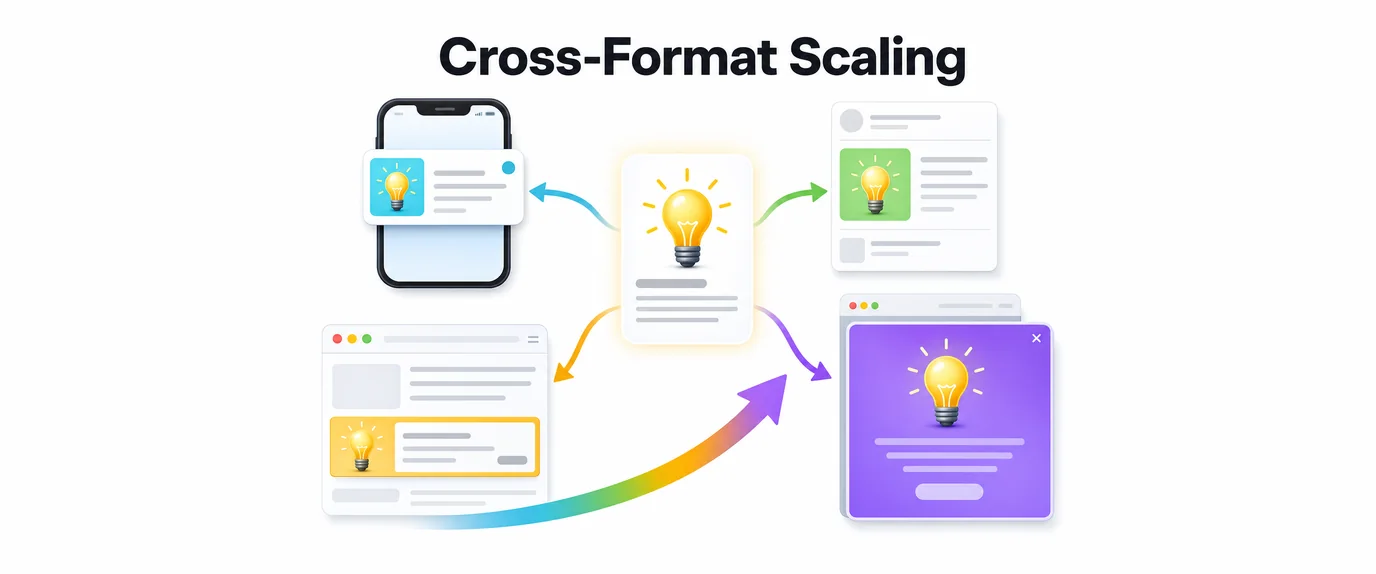
Forget about designing ten different static mockups. In 2026, a banner is a “living” canvas. Powered by AI, the content of the banner shifts based on the user’s immediate context:
- Weather: If it’s raining in the user’s city, the AI adds raindrops to the background or “dresses” the model in a raincoat.
- Time of Day: Morning banners utilize soft pastel tones, while nighttime banners switch to a “Dark Mode friendly” palette.
- Battery Level: When a device is low on power, the banner automatically disables heavy animations to avoid frustrating the user.
3. From Click to Action: Widgets Instead of Images
In 2026, clicking through to a landing page is often considered an unnecessary extra step. Display advertising has become truly interactive:
- Calculator Banners: Users can calculate insurance premiums or loan rates directly within the ad block.
- Selector Banners: Users can choose product colors or sizes inside the banner and land on the site with a pre-filled shopping cart.
- Micro-Gamification: Short quizzes or puzzles that grant the user a unique promo code upon completion.
4. Brand Safety and “Ethical Display”
The Cookieless era has forced banners to become smarter. Instead of “stalking” the user, 2026 banners rely on page semantics. If an article is dedicated to healthy sleep, the banner offers an orthopedic pillow using the same terminology and tone as the author. It doesn’t look like surveillance—it looks like a timely, relevant suggestion.
The Bottom Line
Display Ads in 2026 are no longer about “Buy Now.” They are about integration into the user experience. Banners have become part of the interface, learning to adapt to the user’s mood and environment, transforming from digital noise into a useful tool.
FAQ
1. What are generative UI display ads in 2026?
Generative UI display ads are AI-powered ad formats that dynamically create layouts, visuals, and messaging in real time based on user behavior, context, and intent.
2. How do generative UI ads differ from traditional display ads?
Unlike static banners, generative UI ads adapt instantly—changing design, content, and structure to better match each individual user and maximize engagement.
3. What technologies power generative UI advertising?
They rely on generative AI models, real-time user data processing, reinforcement learning, and advanced design systems that assemble UI components dynamically.
4. Are generative UI ads privacy-friendly?
Yes, when implemented correctly. They typically use aggregated or consent-based data and rely more on contextual signals rather than personally identifiable tracking.
5. How can businesses benefit from generative UI display ads?
Businesses can achieve higher conversion rates, improved personalization at scale, reduced creative production costs, and better ad performance optimization.