Programmatic advertising has transformed how brands buy and sell ad inventory. Instead of manual negotiations, algorithms and real-time auctions match advertisers with the right audience in milliseconds. But success in programmatic depends heavily on choosing the right ad format for your goals. This guide breaks down the most popular programmatic ad formats, their strengths, and how to use them effectively.
What Is Programmatic Advertising?
Programmatic advertising is the automated buying and selling of digital ad space using software and algorithms. It replaces manual insertion orders with data-driven decisions, allowing advertisers to target specific audiences at scale. A core mechanism behind this process is real time bidding for advertisers, where ad impressions are auctioned instantly to the highest bidder that matches targeting criteria.
Programmatic works for both sides of the market: an ads network for advertisers helps brands reach relevant users efficiently, while an ads network for publishers enables website owners and app developers to monetize their traffic through automated demand.
Main Programmatic Ad Formats
Each ad format serves a different purpose, from grabbing attention instantly to blending naturally into content. Below is an overview of the most widely used formats.
Popunder and Clickunder Ads
Popunder and clickunder ads open in a separate browser window or tab, appearing behind the active page. Since the user sees the ad only after closing the main window, this format achieves high visibility without disrupting the immediate browsing experience. It’s especially effective for offers requiring broad reach, such as sweepstakes, utilities, and dating verticals.
Push Notification Ads
Push ads deliver messages directly to a user’s device, similar to app notifications. Users opt in once, then continue receiving updates even after leaving the original website. Push ads are known for strong engagement rates because they reach users outside the browsing session, making them effective for retargeting and time-sensitive promotions.
Banner Ads
Banner ads are the classic display format: static or animated images placed within website layouts. They’re versatile, easy to design, and compatible with nearly every vertical. Banners work well for brand awareness campaigns and can be optimized for different placements, including header, sidebar, and in-content positions.
Native Ads
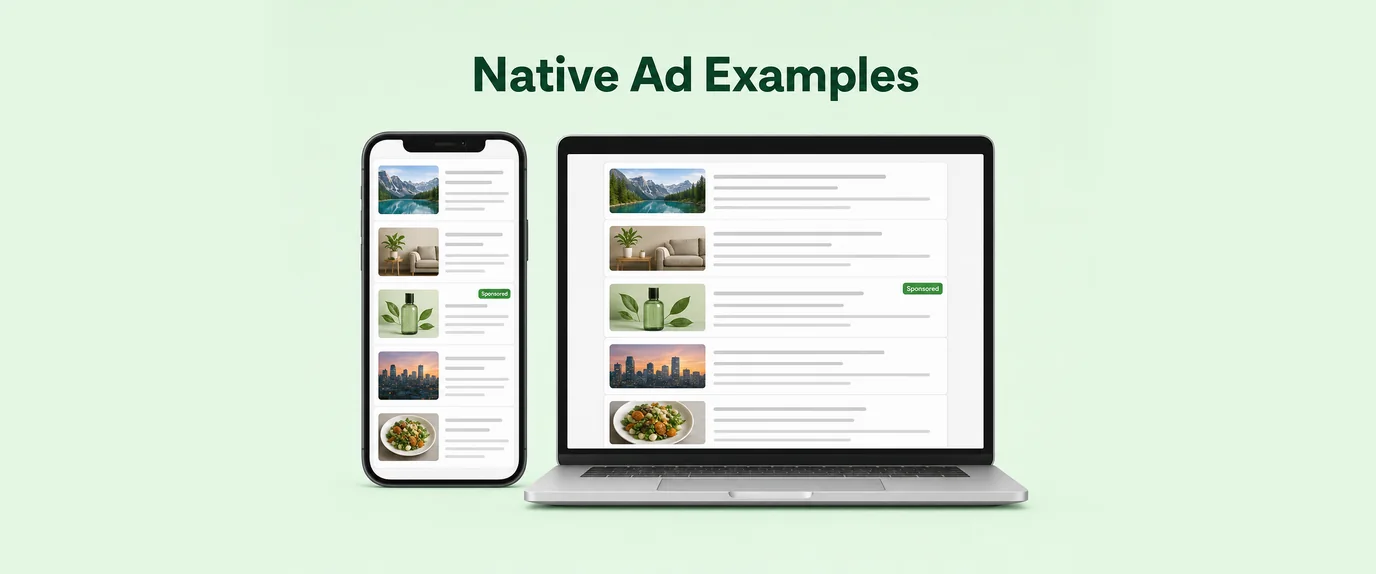
Native ads match the look and feel of the platform they appear on, blending in with organic content like articles or recommended widgets. Because they don’t disrupt user experience, native ads typically achieve higher click-through and engagement rates than traditional banners, particularly for content marketing and lead generation offers.
Smartlink Advertising
Smartlink advertising automatically routes traffic to the best-performing offer based on user data such as geo, device, and browser. Rather than manually selecting a single landing page, advertisers use one smart link that dynamically optimizes conversions, saving time while improving overall campaign yield.
Comparison Table: Programmatic Ad Formats
| Format | Best For | Visibility | Engagement Level |
|---|---|---|---|
| Popunder/Clickunder | Broad reach, sweepstakes, dating | High | Medium |
| Push Notifications | Retargeting, time-sensitive offers | Very High | High |
| Banner Ads | Brand awareness, general campaigns | Medium | Medium |
| Native Ads | Content marketing, lead generation | Medium-High | High |
| Smartlink | Multi-offer optimization | Automatic | High |
Key Benefits of Programmatic Ad Formats
- Automation — campaigns run with minimal manual intervention through real-time bidding systems.
- Scalability — reach audiences across multiple sites and apps simultaneously.
- Precise targeting — filter by geo, device, OS, browser, and connection type.
- Cost efficiency — auction-based pricing helps control spend and maximize ROI.
- Format flexibility — combine formats like push and native for full-funnel strategies.
- Real-time optimization — adjust bids and creatives based on live performance data.
Strategies for Choosing the Right Format
- Match format to campaign goal. Use banners and native ads for brand awareness; use push and popunder for direct-response and volume-driven campaigns.
- Test multiple formats simultaneously. Running native and push campaigns in parallel helps identify which resonates better with a specific audience segment.
- Leverage smartlinks for multi-geo campaigns. Instead of building separate funnels per country, a smartlink automatically adapts to deliver the most relevant offer.
- Use RTB for competitive verticals. Real-time bidding allows advertisers to compete for premium inventory while controlling budget through automated rules.
- Optimize creatives regularly. Even the best format underperforms with stale creatives — refresh banners and push icons frequently to maintain CTR.
- Monitor publisher-side performance. For those monetizing traffic, testing formats like push and native together often increases overall eCPM compared to relying on a single format.
Monetization for Publishers
Publishers looking to monetize websites or apps can integrate multiple ad formats simultaneously to maximize fill rate and revenue. Mobile app developers can also use an Android SDK for publishers to integrate ad formats directly into their applications, unlocking additional monetization opportunities beyond web traffic.
FAQ
What is the most effective programmatic ad format? There’s no single “best” format — effectiveness depends on the campaign goal. Push ads often deliver strong engagement, while native ads perform well for content-driven conversions.
Can I combine multiple ad formats in one campaign? Yes. Many advertisers combine formats like native and push, or use smartlinks to automatically route traffic across several offers based on real-time performance.
How does real-time bidding affect ad pricing? RTB uses live auctions, meaning prices fluctuate based on demand, audience quality, and competition, allowing advertisers to pay closer to the true market value of each impression.
Is programmatic advertising suitable for small budgets? Yes. Programmatic platforms allow granular budget control, making it possible to start small, test formats, and scale spending as performance data becomes available.
How can publishers get started with programmatic monetization? Publishers can register with an ad network, integrate ad tags or an SDK for mobile apps, and begin testing formats like banner, native, and push to see what performs best with their audience.
Conclusion
Programmatic advertising offers a diverse toolkit of formats, each suited to different objectives and audiences. Whether you’re an advertiser aiming to scale conversions through smartlinks and RTB, or a publisher seeking to maximize revenue with push and native placements, understanding the strengths of each format is essential. Testing, optimizing, and combining formats strategically is the key to long-term programmatic success