Popunder, Push, and Native are the three ad formats best suited for launching a new vertical because each targets a different stage of user intent: Popunder maximizes raw reach, Push delivers direct, repeatable engagement, and Native builds trust through content-like placement. The right choice depends on your vertical’s compliance profile, budget, and how “warm” your target audience already is.
Why Format Choice Matters More at Launch Than Later
A vertical launch is the riskiest phase of any media-buying campaign. Budgets are limited, conversion data is thin, and every wasted impression delays the moment you find a profitable angle.
Ad format — the technical delivery method of an advertisement (popunder, push notification, native widget, banner) that determines where and how a user encounters the offer. Choosing the wrong format at launch doesn’t just lower ROI — it can poison your test data, making it impossible to tell whether the offer failed or the format did.
Industry buyers commonly say the first two weeks of a campaign should be treated as a controlled experiment, not a profit center. According to internal benchmarking from ad networks like Gtaroads, advertisers who split test budgets across two formats in the first week identify a scalable angle roughly twice as fast as those committing to one format upfront.
Popunder and Clickunder: Maximum Reach, Minimum Friction
Popunder and clickunder ads open a full browser window behind or in front of the active tab when a user interacts with a page. The format guarantees a full-screen impression, which is why it remains dominant for gambling, betting, dating, and sweepstakes verticals.
Key traits of popunder traffic:
- Extremely high volume, available across nearly every GEO tier
- Low CPM relative to impression size
- Best suited to high-impulse, visually simple offers
- Works well with aggressive, direct-response landing pages
The tradeoff is precision. Popunder is a volume format, not a targeting-first format, so it performs best when the offer itself has broad appeal and a short decision path.
Push Notifications: Repeatable Engagement at Low Cost
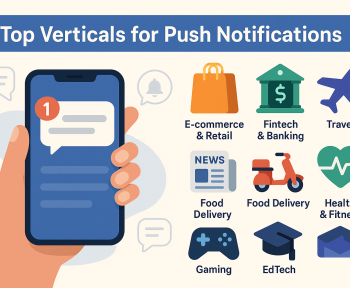
Push ads appear as native-style notifications on desktop and mobile, mimicking system alerts. Users subscribe once (often unintentionally, via a browser prompt) and then receive notifications repeatedly, which makes Push a strong retention and retargeting tool as well as a prospecting one.
Push notification ad — a promotional message delivered through the browser’s or OS’s native notification system, shown to users who previously opted into a subscriber base, regardless of whether they are currently browsing.
Expert comment: Media buyers frequently note that Push subscriber lists behave like a mini email list — the same segment can be re-monetized across multiple offers, which is why many advertisers treat Push CPA slightly higher than Popunder’s as acceptable, given the format’s reusability.
Push works especially well for:
- Nutra and health offers requiring repeated exposure before conversion
- Finance and crypto verticals where trust builds over multiple touches
- Utility and software installs with simple, low-friction CTAs
Native Advertising: Trust-First Placement
Native ads are styled to match the look and feel of the publisher’s content — think “recommended articles” widgets. They generate lower raw volume than Popunder but consistently higher engagement quality because users don’t perceive them as intrusive.
Native is the preferred launch format when:
- The vertical requires pre-selling via an advertorial or content page
- The offer has a higher price point (finance, insurance, premium nutra)
- Compliance rules restrict aggressive creative formats
Where Banner and Smartlink Fit Into a Launch Strategy
Two supporting formats often round out a launch stack. Banner ads still work for brand-safe, visually driven verticals like e-commerce and app installs, offering predictable, standardized placements across a huge publisher inventory.
Smartlink advertising removes the guesswork of offer selection entirely — traffic is routed automatically to the best-converting offer for each user’s GEO, device, and carrier, which makes it a low-effort way to validate a vertical before committing to a specific format-and-offer combination.
Comparison Table: Popunder vs Push vs Native
| Criteria | Popunder / Clickunder | Push Notifications | Native Ads |
|---|---|---|---|
| Relative volume | Very high | High | Medium |
| Relative cost (CPM/CPC) | Low | Low–Medium | Medium–High |
| Best-fit verticals | Gambling, dating, sweepstakes | Nutra, finance, utilities | Finance, insurance, premium nutra |
| User intent level | Low–impulse | Medium, repeatable | Medium–high, trust-based |
| Creative complexity needed | Low | Low–Medium | Medium–High |
| Fraud risk (typical) | Medium | Low–Medium | Low |
| Retargeting capability | Limited | Strong (subscriber base) | Limited |
A Practical Framework for Choosing at Launch
Start by mapping your vertical against two variables: how impulsive the buying decision is, and how strict the compliance requirements are.
- High-impulse, low-compliance verticals (gambling, dating, sweepstakes) → start with Popunder for volume, layer in Push for retargeting
- Medium-consideration verticals (nutra, crypto, utilities) → start with Push, test Native for higher-quality segments
- High-consideration, compliance-sensitive verticals (finance, insurance, premium nutra) → start with Native, use Smartlink to catch overflow traffic
For advertisers running performance campaigns at scale, real-time bidding across formats lets you shift budget automatically toward whichever combination is producing the best CPA, without manually rebuilding campaigns.
For Publishers: Monetizing the Same Traffic Across Formats
The same logic works in reverse for publishers. A single site can run Popunder for baseline revenue, Push for repeat visitor monetization, and Native widgets for content-adjacent placements — all managed through one publisher account. Mobile-heavy publishers can also integrate an Android SDK to monetize in-app traffic with the same format mix used on web.
Frequently Asked Questions
What is the cheapest ad format to test a new vertical? Push notification ads are usually the cheapest starting point, since CPC bids are low and volumes are high enough to gather meaningful data quickly.
Is Popunder traffic good for gambling and betting offers? Yes, popunder and clickunder traffic converts well for gambling, betting, and dating because it delivers full-page exposure suited to impulse-driven decisions.
Does Native advertising work for cold traffic? Yes, Native performs well with cold traffic in nutra, finance, and utility verticals because it builds trust before the click through content-like placement.
Which ad format has the lowest fraud risk? Native and Push formats typically show lower fraud rates than Popunder, particularly when bought through a network offering RTB and transparent targeting.
Can I combine Popunder, Push, and Native in one campaign? Yes, many advertisers run all three simultaneously during launch, then reallocate budget toward whichever format shows the best ROI.
What format should I choose with a very small test budget? Push ads or Smartlink advertising are the safest starting points, since both allow granular bidding and quick cuts of underperforming segments