Ad blocks, no matter how “native” they claim to be, still remain blocks. In 2026, the user’s brain instantly recognizes rectangular inserts, product cards, and teaser networks. The reader focuses exclusively on the body of the article, completely ignoring the periphery.
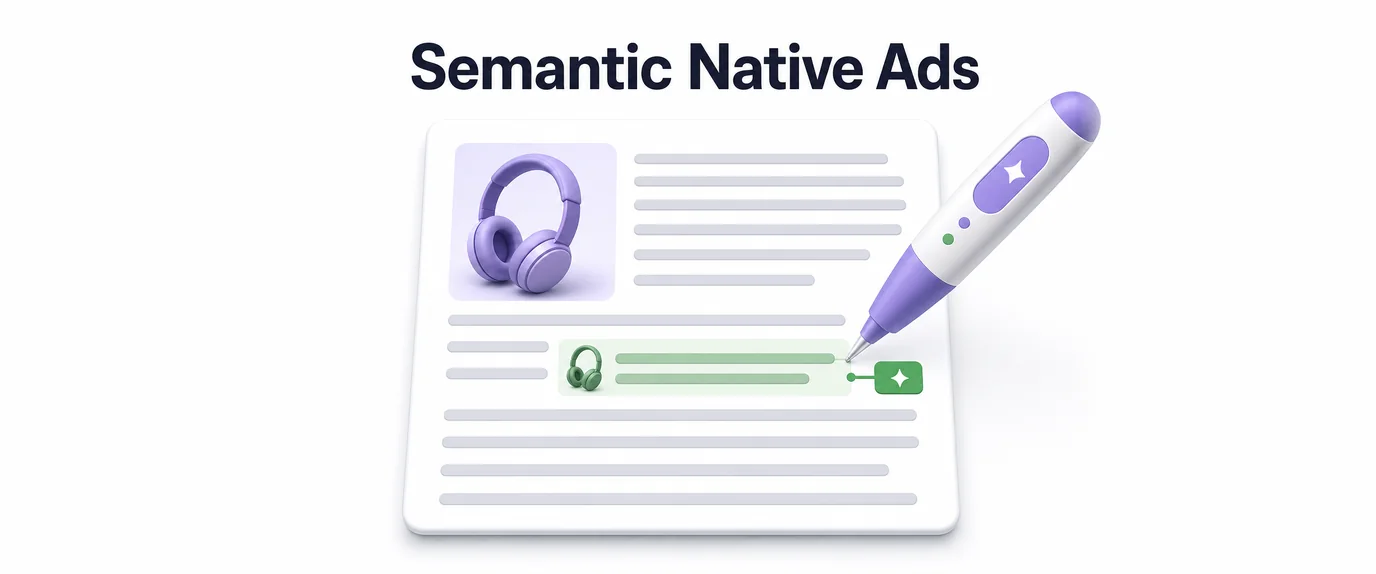
Semantic Injection Native (SIN) technology solves this problem fundamentally: it eliminates dedicated ad placements altogether and trusts the AI to weave a product recommendation directly into the sentences written by the site’s author.
1. How It Works: The Stylistic Cloning Method
The algorithm then finds the semantically perfect spot in the text and seamlessly integrates the mention of the offer.
Example: An author is writing a review of capital accumulation strategies.
- Original author text: “…under volatile market conditions, traditional deposits are burned due to inflation, forcing investors to look for alternative safe havens.”
- Text after AI infiltration: “…under volatile market conditions, traditional deposits are burned due to inflation, forcing investors to look for alternative safe havens. In May 2026, smart-protocol X became such a haven for many, automatically rebalancing stablecoin portfolios and shielding capital from drawdowns.“
The phrase looks exactly as if the author of the article is personally recommending this tool. The product link is embedded right into the context.
2. Hyper-Personalization of Text for the Reader
The most interesting part happens when two different people open the exact same article. The AI alters the “injection” based on the user’s psychotype (remembering our first article on Cognitive Targeting):
- To the analyst, the AI will add a phrase with precise numbers: “…protocol X, boasting a verified security audit score of 99.8%”.
- To the anxious user (FOMO), the system will deliver: “…protocol X, whose private pool allocations are projected to close by Friday”.
The product is the same, the article is the same, but the textual argument inside the paragraph is generated individually to match the structure of the reader’s brain.
3. Ethics and AdBlock Immunity
Since the ad is generated at the level of the page’s HTML DOM tree, it enjoys 100% immunity to AdBlock and any other content filters. To defensive browser extensions, these are simply standard paragraphs of the article.
For the sake of transparency and compliance with 2026 regulatory rules, these native integrations are highlighted with a barely noticeable dotted underline or a soft color shift upon hovering, displaying a concise “Partner Recommendation” badge. This does not annoy the reader, as the integration does not disrupt the reading flow and does not look like aggressive spam.
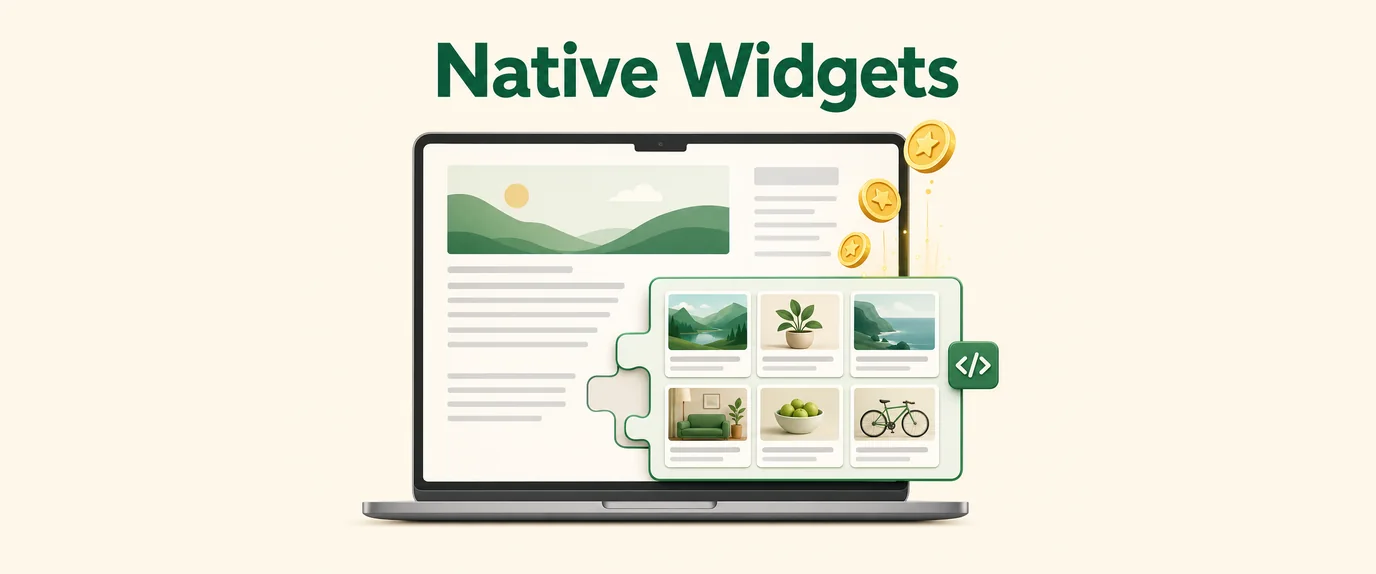
Comparison: Native Widgets vs. Semantic Injection (2026)
| Parameter | Native Widgets (2024) | Semantic Injection (2026) |
| Ad Location | Inserts between paragraphs / below article | Inside the author’s original sentences |
| Style | Templated advertiser copy | Full replication of the author’s Tone of Voice |
| AdBlock Resistance | Partially blocked | Full immunity (100% visibility) |
| Engagement Level (CR) | Average (3% – 5%) | High (14% – 22%) due to author’s authority |
Detailed Summary: Automated Influence Marketing
Semantic Injection Native in 2026 has turned traditional affiliate marketing into highly scalable influencer marketing. We no longer need to negotiate manual sponsorships with individual bloggers—AI does it in seconds across millions of websites concurrently.
Key takeaways for media buyers:
- Text Reclaims the Throne: For a long time, media buying leaned heavily into video and visual formats. SIN restores massive value to written content. Media buyers who master training AI models to smoothly inject commercial intent capture the most conscious and high-value audience.
- Maximum Trust Level: Consumers visit an authoritative resource seeking an expert opinion. When a commercial argument flows naturally out of an expert’s narrative logic, the user’s mental resistance drops to zero.
- Evergreen Campaign ROI: Unlike banners that suffer from rapid creative fatigue within two days, text-injected offers don’t expire. As long as the primary article remains relevant and pulls organic or recommended traffic, the AI engine monetizes it continuously, swapping in the most current and relevant offers in real time.
The Verdict: In 2026, native advertising stopped being a wrapper around content; it became part of the fabric of the content itself. Stop fighting for the remaining ad spaces on the margins of web pages—embed your offers directly into the thoughts the authors are already sharing.