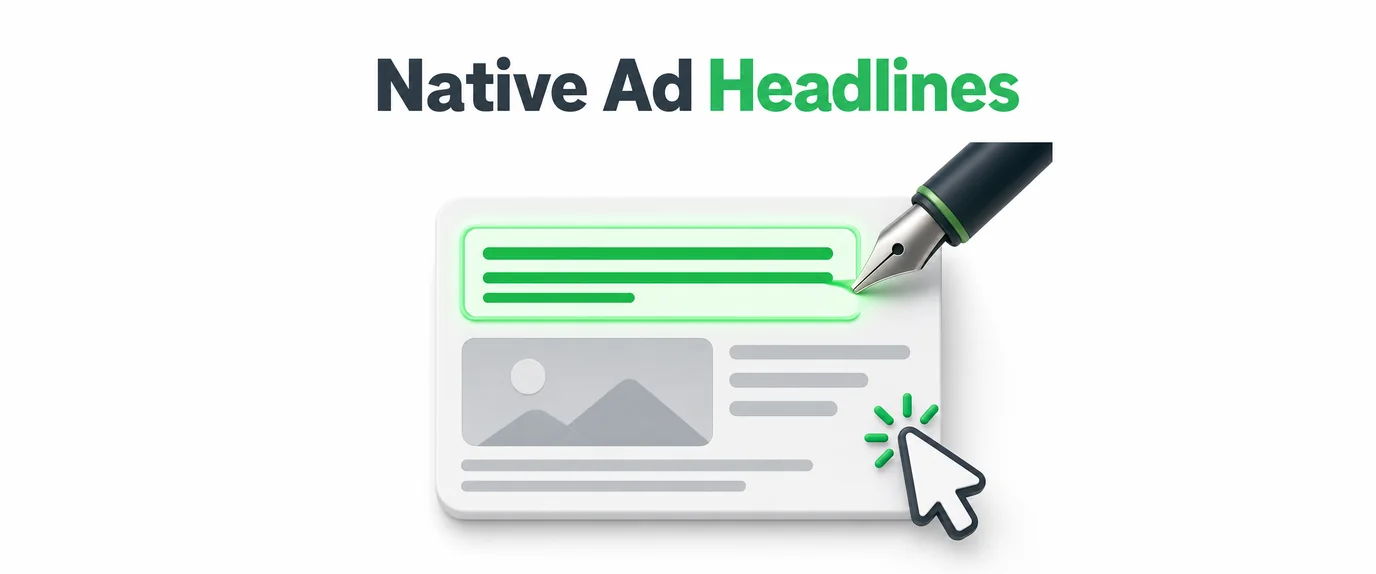
In native ads, the headline does most of the work. The image grabs a glance, but the headline decides whether someone clicks or keeps scrolling. Native placements sit inside editorial feeds, so your copy competes with real articles, not with other banners.
That changes the rules. A headline that shouts “BUY NOW” feels foreign next to a news story or a how-to guide, and readers skip it on instinct. A headline that sounds like useful content gets read. The goal is to earn attention by being relevant, not to force it.
What “Doesn’t Feel Like an Ad” Really Means
Writing copy that doesn’t feel like an ad does not mean tricking people. It means matching the tone, value and pacing of the surrounding content while staying honest about what the click delivers.
Readers in a feed scan for three things:
- Relevance: does this relate to what I’m reading or thinking about?
- Curiosity: is there something here I don’t know yet?
- Trust: does this sound like a real source, not a hard sell?
If your headline answers yes to all three, it blends in without misleading. If the landing page then breaks the promise, you lose the visitor and the platform’s goodwill.
Core Principles of High-Performing Native Headlines
Strong native headlines share a few habits:
- Lead with the reader’s benefit, not your product. “How to Cut Your Energy Bill by 20%” beats “Buy Our Smart Thermostat.”
- Be specific. Numbers, timeframes and concrete outcomes outperform vague claims.
- Open a curiosity gap, then close it. Hint at the answer, and make sure the landing page delivers it.
- Use plain, conversational language. Skip jargon and corporate phrasing.
- Keep it short. Aim for 6 to 12 words so it isn’t truncated on mobile.
- Stay honest. Never promise what the page can’t back up.
Headline Formulas You Can Adapt Today
Formulas are starting points, not scripts. Swap in your own offer, audience and angle.
| Formula | Example | Best for |
|---|---|---|
| How-to | How to Build a Weekly Budget You’ll Actually Follow | Education, finance, SaaS |
| Number list | 7 Mistakes New Traders Make in Their First Month | Lead gen, comparisons |
| Question | Is Your Phone Draining Faster Than It Should? | Apps, utilities |
| Curiosity gap | The Simple Habit Behind Better Sleep | Health, lifestyle |
| Social proof | Why 50,000 Marketers Switched Ad Networks This Year | B2B, services |
| Time-bound result | Learn the Basics of Email Marketing in 15 Minutes | Courses, tools |
| Local or niche | What Ukrainian Freelancers Should Know About Taxes in 2026 | Regional offers |
Test each formula against your audience, because the same structure can win in one vertical and flop in another.
Words and Habits That Make Headlines Feel Like Ads
Some patterns trigger “ad blindness” almost immediately. Cut or soften these:
- ALL CAPS and excessive punctuation (“AMAZING!!!”)
- Hype words like “revolutionary,” “unbeatable” or “game-changing”
- Direct commands without context (“Click here,” “Buy today”)
- Brand names stuffed at the front with no value attached
- Exaggerated claims (“Make $10,000 overnight”)
Replace them with calmer, more informational phrasing. “Discount” can become “how to save,” and “best product” can become “what to look for in a [category].”
Match the Headline to the Audience and Context
A great headline in the wrong placement still underperforms. Consider:
- Traffic source and publisher vertical. A finance headline works on finance pages, while a gaming offer needs a gaming audience.
- Funnel stage. Cold audiences respond to educational angles, while warm audiences respond to offers and comparisons.
- Device. Mobile feeds truncate text, so put the key words first.
- Geo and language. Translate the idea, not just the words, and use local references where they fit.
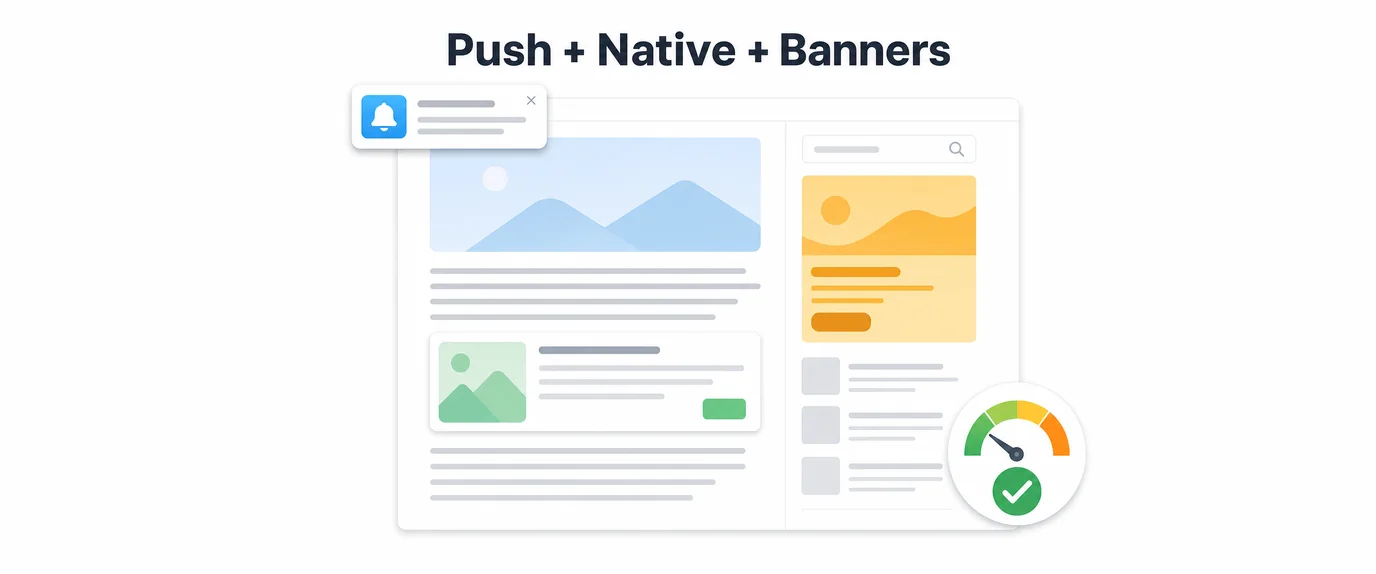
If you’re planning a campaign across several formats, make sure the message stays consistent. A native headline pairs well with a banner or push notification that repeats the same promise in a different shape, so users meet one story instead of three.
How to Test Native Headlines Properly
Even experienced copywriters guess wrong, so testing is non-negotiable. A simple process:
- Write 5 to 10 variations across different formulas and angles.
- Change one variable at a time, such as the number, the angle or the length.
- Pair each headline with the same image to isolate the effect of copy.
- Let each variant gather enough impressions before judging, and avoid calling winners after a few dozen clicks.
- Track more than CTR. A headline with high clicks and no conversions is attracting the wrong people.
- Scale the winner and iterate. Fatigue sets in, so keep refreshing creatives.
Advertisers who want finer control over placements and bids can combine this testing with real time bidding, which helps put winning headlines in front of the right impressions at the right price.
Where Native Headlines Fit in Your Wider Ad Mix
Native is rarely the only channel. Many teams use it for education and trust-building, then support it with other formats:
- Push ads for re-engagement and time-sensitive offers
- Popunder and clickunder ads for high-volume reach
- Smartlink advertising to route traffic to the best-performing offer automatically
- Banner ads for brand recall and retargeting
If you’re ready to launch, an ads network for advertisers gives you access to these formats from one dashboard. If you own sites or apps and want to monetize traffic with native placements, check the ads network for publishers or the Android SDK for publishers for in-app inventory.
Quick Pre-Launch Headline Checklist
Before you publish, run each headline through this list:
- Does it promise something the landing page actually delivers?
- Is there a clear benefit or a genuine reason for curiosity?
- Is it under roughly 12 words?
- Is it free of hype, caps and clickbait language?
- Would it look natural next to editorial content on the page?
- Is the key idea visible in the first few words?
If you answer “no” to any of these, rewrite before spending budget.
FAQ
What is the ideal length for a native ad headline?
Most platforms display 40 to 90 characters before truncating, and 6 to 12 words is a safe range. Put the strongest words early so mobile users see them.
Are question headlines better than statements?
Neither is universally better. Questions work when they touch a real problem the reader has, while statements work when you can state a concrete benefit or number. Test both.
Is curiosity-gap copy the same as clickbait?
No. A curiosity gap teases an answer that the landing page actually provides. Clickbait overpromises and underdelivers, which hurts conversion, trust and often approval on ad platforms.
How many headline variations should I test at once?
Start with 5 to 10 variations per audience segment. Too few limits learning, while too many splits impressions so thinly that results take too long to become reliable.
Should I include my brand name in the headline?
Only if the brand carries trust with your audience. Otherwise, lead with the value and show the brand in the sponsor label or on the landing page.
Can the same headline work across geos?
Rarely without changes. Adapt idioms, units, currencies and cultural references, and test each geo separately.
Final Thoughts
The best native headlines read like helpful content and deliver on their promise. Lead with the reader’s benefit, stay specific and honest, and test constantly. When the headline, creative and landing page tell one consistent story, native ads stop feeling like interruptions and start earning clicks that convert