For years, the industry viewed Smartlink technology as a “lazy” tool—a passive bucket where media buyers dumped unmonetized, remnant traffic, crossing their fingers for a few cents of revenue. In 2026, that perception is entirely obsolete.
Today, a smartlink is a high-performance, AI-driven monetization layer. However, while the algorithm handles the automated routing, the quality of the data you feed it determines your profit margin. Performance varies wildly depending on your traffic quality, structural segmentation, and funnel architecture. To consistently scale your EPC (Earnings Per Click) and CTR (Click-Through Rate), you must transition from a “set-and-forget” mindset to a structured, data-driven optimization protocol.
Here is the definitive guide to engineering higher returns and maximizing revenue per visitor in 2026.
1. The Core Economics: Understanding Smartlink Performance Metrics
Before adjusting a single campaign parameter, you must understand the mathematical relationship governing your smartlink. Optimization is a delicate balancing act; aggressively manipulating one metric can inadvertently crash another.
- CTR (Click-Through Rate): The percentage of users who see your ad and actually click the Smartlink. A high CTR indicates strong creative alignment, but if the click is fueled by “clickbait” rather than genuine intent, it will destroy your downstream metrics.
- CR (Conversion Rate): The percentage of those clicks that successfully complete the target action (install, deposit, CC submit).
- EPC (Earnings Per Click): The undisputed king of affiliate metrics. It is the average gross revenue generated per single click on your link ($EPC = Total Revenue / Total Clicks$).
- RPM (Revenue per Mille): Your total revenue generated per 1,000 ad impressions.
The Golden Rule: Improving CTR without simultaneously defending your conversion quality will mathematically reduce your EPC. A smartlink algorithm learns from conversions. If you flood the link with low-intent, cheap clicks, the algorithm will route that traffic to low-payout, generic sweepstakes rather than premium $800-payout crypto offers.
To understand exactly how these variables interact in real-time, use this interactive calculator to model your funnel economics:
2. Granular Traffic Segmentation: The Foundation of High EPC
A smartlink algorithm is highly intelligent, but feeding it a blended, chaotic firehose of traffic slows down its learning phase, burning your budget in the process. The algorithm performs exponentially better when traffic is pre-segmented at the campaign level.
Key segmentation vectors to isolate:
- GEO Tiering: Never mix Tier 1 (USA, UK, CA) with Tier 3 (IN, BR, NG) in the same campaign. The EPC disparity will confuse your tracker’s bidding automation. Isolate high-converting Tier 2 GEOs for scaling.
- Device & OS: Mobile and Desktop traffic represent entirely different psychological states. Furthermore, separate Android from iOS. iOS users generally possess higher purchasing power and are routed to premium e-commerce or high-tier dating, whereas Android traffic often excels in utility app installs.
- Connection Type: 5G/Wi-Fi users have the bandwidth for heavy VSLs (Video Sales Letters) and complex funnels. Users on 3G connections bounce instantly if a page exceeds 2 megabytes.
3. The 2026 Optimization Matrix
Use this matrix to identify exactly which levers to pull based on the specific metric you are trying to rescue.
| Optimization Area | Action Strategy | Expected EPC Impact | Expected CTR Impact |
| GEO Targeting | Isolate Tier 1 + rapidly growing Tier 2 economies (LATAM). | High | Medium |
| Device Optimization | Force mobile-first creatives; isolate iOS traffic for premium offers. | High | High |
| Landing Page Speed | Compress DOM size; enforce load times strictly under 2.5 seconds. | Medium | High |
| Creative Testing | A/B test localized banners, push icons, and dynamic prelanders. | High | Very High |
| Offer Rotation | Rotate underlying Smartlink sources/networks every 7 days. | High | Medium |
| Frequency Capping | Hard limit ad exposure per user (e.g., 1 impression / 24 hours). | Medium | High |
4. Engineering the Click: Improving CTR with Creative Optimization
CTR is the metric of initial human attention. It is heavily influenced by the psychological angle of your creative and its relevance to the specific traffic source.
Best practices for high-converting creatives:
- The Curiosity Gap: Use emotionally driven headlines that provoke an undeniable urge to resolve a mystery.
- Cultural Localization: Do not just translate English into Spanish. Match the creatives with the exact local slang, currency, and cultural context of the target GEO.
- Format Congruence: Avoid generic, overly polished stock imagery. Native Ads must look like editorial content, not ads. Banner advertising must utilize contrasting colors and crystal-clear CTA buttons to stand out against the publisher’s site design.
Example A/B Test for a Dating Smartlink:
- Version A (Weak): “Meet local singles in your area tonight!” (Ad blind, ignored).
- Version B (Strong): “Your profile was viewed 27 times today. 1 pending message.” (Triggers the psychological need for resolution, driving massive CTR).
5. Traffic Quality and Pre-Qualification (The True EPC Driver)
Many media buyers obsess over getting cheaper clicks, only to watch their EPC plummet to zero. EPC depends entirely on how accurately the traffic’s intent matches the advertiser’s final offer.
If you are buying massive volumes of raw, untargeted Popunder and clickunder ads, you cannot send that traffic directly to a smartlink and expect premium payouts. You must filter the noise.
Actions to defend your EPC:
- Kill the Bots: Utilize advanced fraud-filtering tools to block known datacenter IPs, headless browsers, and VPNs before they hit your link.
- Optimize for Intent: For search or native traffic, aggressively optimize for high-intent keywords and blacklist low-intent generic terms.
- The Golden Rule of Smartlinks: Systems perform best when traffic is mathematically pre-qualified before the smartlink algorithm even touches it.
6. Funnel Architecture: The Power of Prelanders
The most devastating mistake a buyer can make is sending raw, cold traffic directly to a smartlink. A prelander acts as the crucial psychological bridge between the ad click and the final offer. It filters out accidental clicks and “warms up” the user.
High-performing prelander frameworks in 2026:
- The Quiz Funnel: (“Find your perfect match in 3 questions”). Micro-commitments drastically increase the final conversion rate.
- The Advertorial: Story-based, fake news-style pages that build a narrative around the product before asking for a sale.
- Interactive Gamification: Digital scratch cards or spinning prize wheels.
Key insight: A prelander might reduce the raw volume of clicks reaching the smartlink, but the traffic that does pass through is highly qualified. This mathematical filtration consistently doubles or triples the final EPC.
7. Syncing Traffic Sources with Smartlink Intent
Different traffic sources possess vastly different biological intent profiles and require tailored handling.
| Traffic Source | Average CTR | Average EPC | Optimization Strategy |
| Push Ads | High | Medium | Rely heavily on urgency, system-style alerts, and emojis. Requires aggressive frequency capping. |
| Native Ads | Medium | High | Focus strictly on content-style advertorials. Build trust through long-form storytelling before the redirect. |
| Pop Traffic | Very High | Low-Med | Do not rely on ad copy. Use ultra-aggressive, high-load-speed prelanders to capture attention instantly. |
| SEO / Organic | Medium | Very High | Traffic is already warm. Route directly to premium smartlinks focusing on niche relevance. |
8. Rotation, Testing, and Algorithmic Fatigue
Running a single Smartlink URL from a single network for three months straight will inevitably lead to audience fatigue and algorithm stagnation. The machine learning model becomes “stuck” in a local maxima.
The Rotation Protocol:
- Network Split-Testing: Never rely on a single affiliate network. Route your traffic through a TDS (Traffic Delivery System) that splits clicks 50/50 between two different smartlink providers to find the true baseline EPC.
- Weekly Refreshes: Rotate your core Smartlink tracking parameters every 5–7 days.
- Ruthless Pruning: Track EPC per individual placement/sub-source daily. Pause underperforming publisher zones instantly.
9. The Scaling Strategy
Once your EPC stabilizes and your ROI is consistently positive, it is time to scale. Do not break the machine by changing everything at once.
- Gradual Budget Increases: Increase campaign budgets by 15–20% per day. Doubling the budget overnight will force the ad network’s algorithm to buy lower-tier traffic to fulfill the spend, crashing your EPC.
- Horizontal Scaling: Take your exact winning funnel (creatives + prelander) and launch it in socio-economically similar GEOs (e.g., if Spain is highly profitable, duplicate the exact setup for Italy and Portugal).
- Vertical Scaling: Keep the GEO and funnel identical, but aggressively bid higher to win premium placements on the current traffic source.
10. Critical Mistakes to Avoid
- Sending naked, cold traffic directly to a smartlink without a prelander.
- Ignoring mobile optimization; testing funnels on a desktop monitor when 85% of the traffic is on a 6-inch screen.
- Failing to rotate creatives; allowing banner blindness to destroy your CTR.
- Overloading redirect chains; forcing the user through 4 different tracking domains before the smartlink, losing 30% of traffic to load times.
Conclusion
Smartlink optimization is not a static, one-time setup; it is a relentless, ongoing process of psychological segmentation, A/B testing, and algorithmic refinement. The most explosive gains in EPC and CTR will not come from finding a “magic network,” but from rigorously improving your traffic quality, aligning your creative angles with user intent, and deploying elite prelanders to warm up visitors.
FAQs
1. What is Smartlink advertising and how does it work?
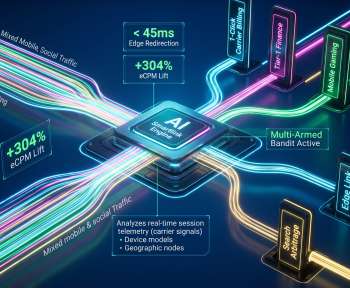
A Smartlink is an automated, AI-driven affiliate URL that analyzes incoming traffic data (GEO, device, OS, connection, behavioral intent) in real-time and instantly redirects the user to the specific offer that statistically yields the highest conversion probability for that unique profile.
2. How can I increase CTR in Smartlink campaigns?
CTR is improved by hacking human curiosity. Utilize highly engaging, emotionally driven creatives, ensure messaging is perfectly localized to the region’s slang, continuously A/B test ad formats, and ensure the visual aesthetic matches the specific traffic source (e.g., making native ads look editorial).
3. What factors most affect EPC in Smartlink traffic?
EPC is dictated entirely by traffic quality. It is influenced by your GEO targeting precision, device filtering, the relevance of the offer to the user’s intent, your ability to filter bot traffic, and the psychological effectiveness of your prelanders.
4. Do prelanders really improve Smartlink performance?
Absolutely. Prelanders serve as a crucial filtration and “warm-up” layer. While they may slightly reduce the total volume of clicks reaching the final offer, they ensure that the users who do click are highly engaged, which drastically spikes the conversion rate and overall EPC.
5. How often should I rotate Smartlink campaigns or offers?
To avoid ad fatigue and prevent the routing algorithm from stagnating, it is highly recommended to rotate your Smartlink URLs and creatives every 5–7 days. Continuously split-test against different networks to ensure you are receiving the highest possible yield for your traffic.