When media buyers discover a winning offer and creative angle on a single ad format, their immediate reaction is usually to pump more daily budget into that exact campaign. However, every ad format has a strict ceiling. Doubling your daily spend on a single native campaign often leads to rapid audience saturation, rising bids in competitive auctions, and steep creative burnout within 48 hours.
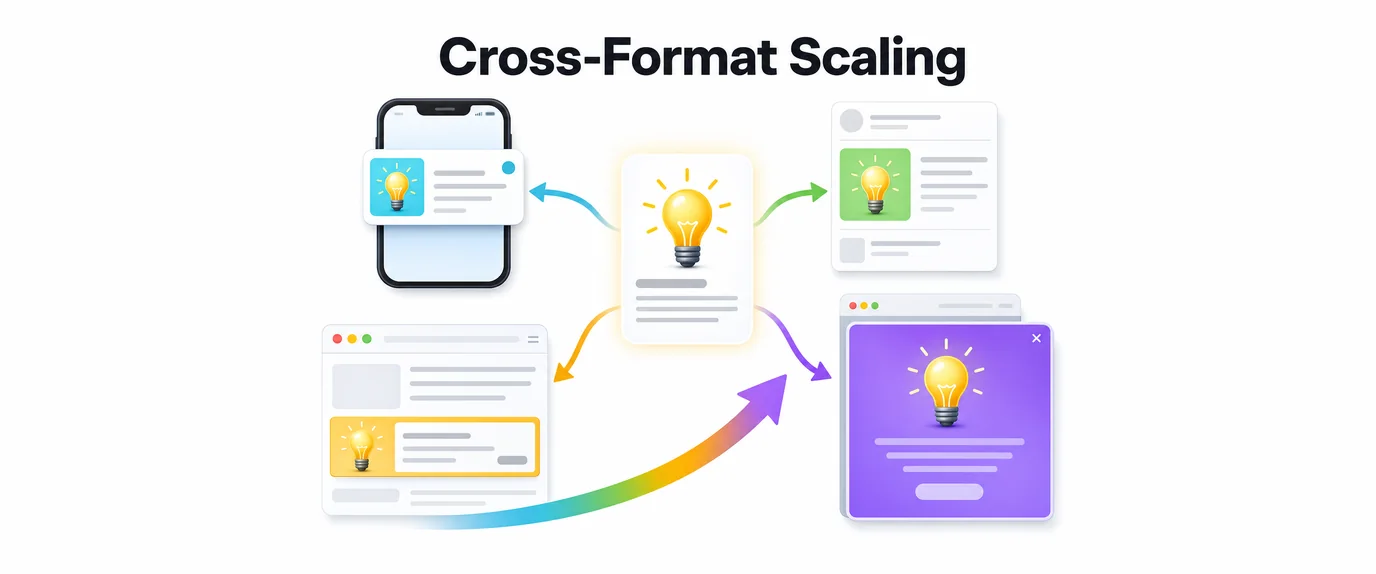
The solution to scaling past single-format ceilings is Cross-Format Campaign Scaling.
Instead of treating Native, Popunder, Push, and Display as isolated silos, high-volume advertisers use a unified ad network infrastructure like GTaro Ads to port proven psychological angles across multiple formats. By adapting creative assets to fit the user mindset of each ad format while managing frequency caps across the entire account, media buyers can triple their overall traffic volume while maintaining stable acquisition costs.
Here is an architectural guide to cross-format creative translation, audience synchronization, and campaign execution.
1. The Single-Format Ceiling: Why Vertically Scaling Bids Fails
Scaling a campaign by simply raising daily budgets or aggressive bidding on a single ad format hits three distinct operational walls:
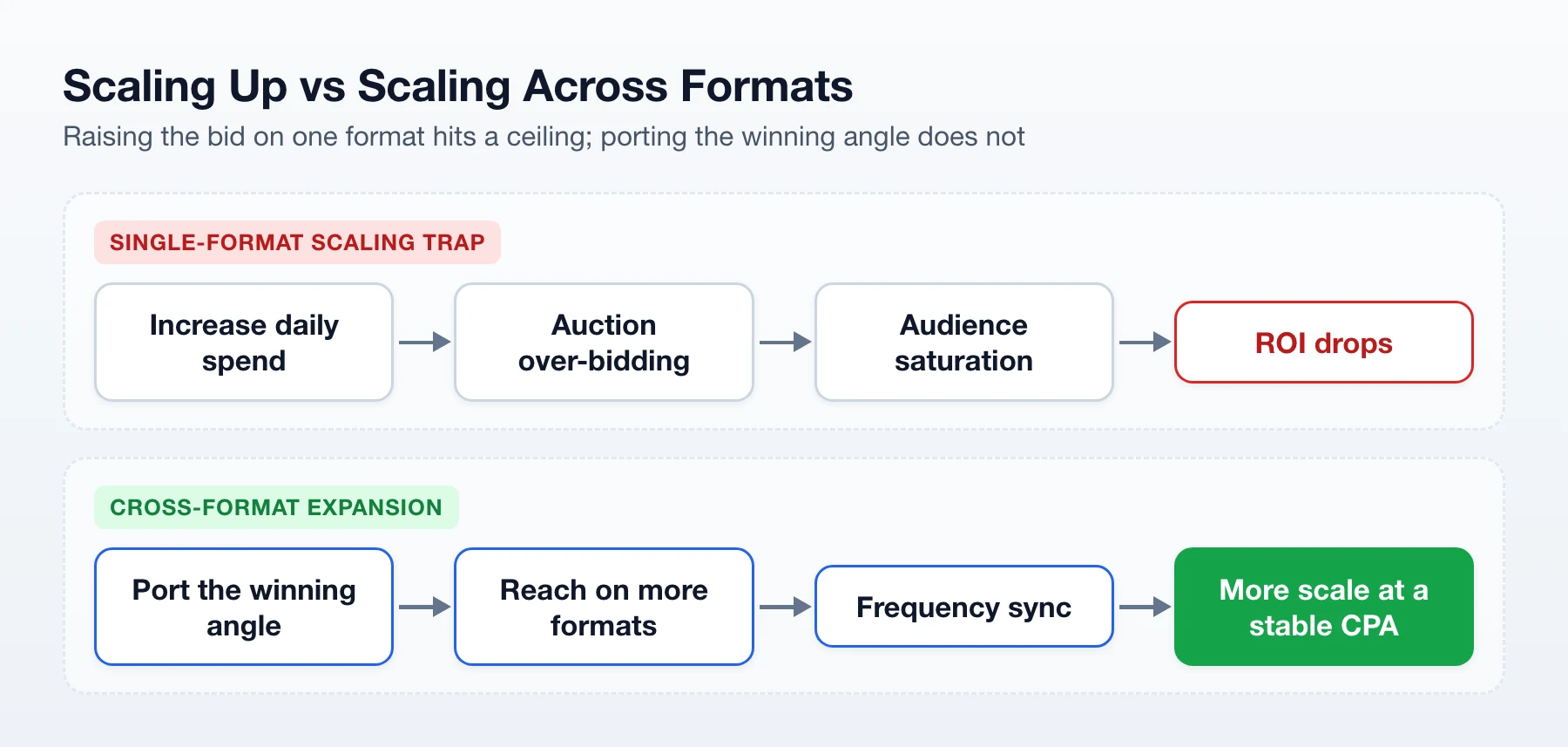
- Auction Inflation: Increasing bids on a single placement forces your DSP campaigns to compete against themselves for top-tier publisher inventory, artificially inflating your effective Cost Per Impression (eCPM).
- Format-Specific Blindness: Different users interact with web content in different ways. Some users ignore desktop banner ads but read mobile Push notifications; others dismiss Push alerts instantly but engage with long-form Native prelanders.
- Rapid Angle Fatigue: Exposing the same user cohort to the exact same visual layout multiple times a day rapidly diminishes Click-Through Rates (CTR) and conversion intent.
2. The Format Translation Matrix: Adapting Angles Across Inventory
You cannot simply take a long-form Native teaser image and paste it into a 192×192 Push notification icon. Each ad format targets a different stage of user attention and requires structural adaptation.
| Format | Attention stage | Creative engine required |
|---|---|---|
| Native | Editorial discovery (high context) | Teaser visual + curiosity headline + prelander |
| Push | Direct interrupt (micro-attention) | High-contrast icon + 4-word hook + urgent CTA |
| Popunder | Instant full-screen (immediate intent) | Sub-200ms interactive prelander + direct action |
| Display | Visual passive (brand / awareness) | Clean value prop + high-contrast button |
The 3 Core Translation Paths:
Path A: Native Teaser ➔ Push Notification
- Native Baseline: Uses an intrigue-based image and an editorial headline (“The Simple Home Setting Most Owners Overlook”).
- Push Adaptation: Compress the headline into a 4-word direct trigger for the short title bar (“Check This Setting Now”). Use a high-contrast macro icon (192×192) that mimics a system alert or messaging notification rather than a full editorial photo.
Path B: Native / Push ➔ Popunder Landing Page
- Native Baseline: Relies on a multi-step prelander to educate the user before forwarding them to the final offer.
- Popunder Adaptation: Strip away the introductory article text. Convert the core angle into a zero-framework, 1-page interactive survey or micro-quiz that renders in under 200 milliseconds. The popunder must deliver the core hook within the first half-second of viewability.
Path C: Display Banner ➔ Native In-Feed Unit
- Display Baseline: Uses a direct product image, pricing badge, and a strong Call-To-Action button.
- Native Adaptation: Remove hard promotional badges and sales buttons. Replace the product shot with a candid, real-world photo that blends seamlessly into the publisher’s editorial content stream.
3. Account-Wide Frequency & Recency Synchronization
The primary risk of running Native, Push, Popunder, and Display campaigns simultaneously is over-saturating the same user. If a user sees your Popunder, gets a Push notification 5 minutes later, and stumbles across your Native ad on a news site all in one hour, they develop immediate ad fatigue.
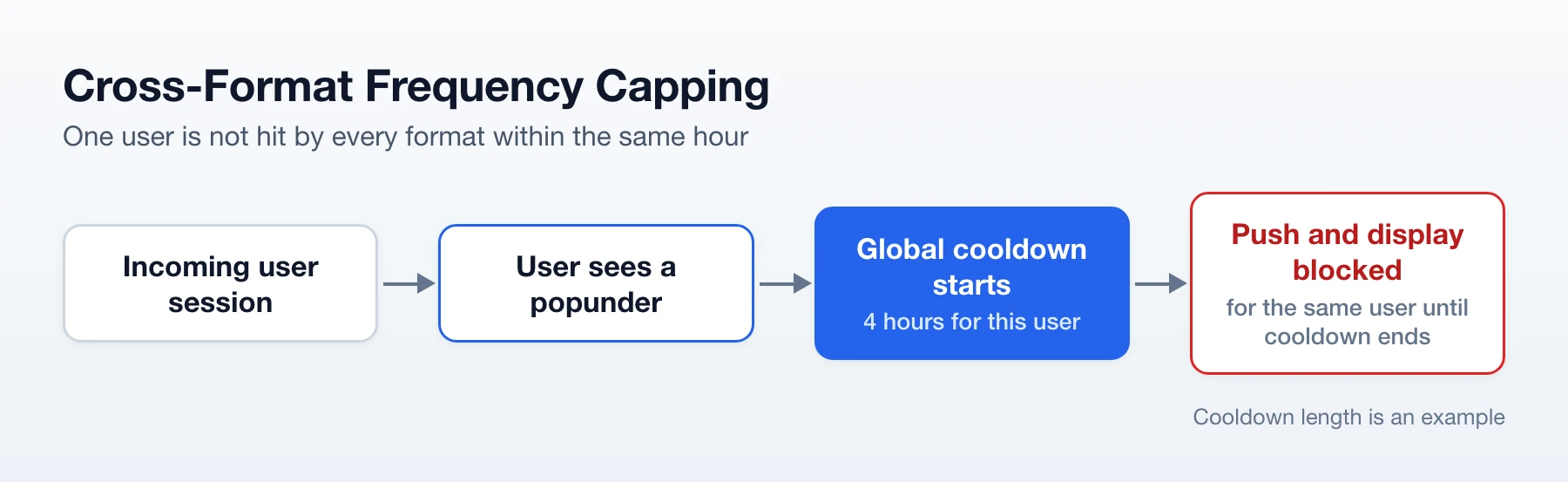
GTaro Ads solves this using Account-Wide Cross-Format Frequency Capping.
How Cross-Format Sync Protects Campaign Budgets:
- Unified User Profiling: The ad server assigns an encrypted user token across impression touchpoints within the ad network.
- Dynamic Recency Cooldowns: When a user engages with a high-impact format (such as clicking a Popunder or tapping a Native ad), the platform automatically pauses impressions from secondary formats (like Push alerts) for a configurable cooldown window (e.g., 4 to 6 hours).
- Sequence-Based Delivery: Set up sequential user journeys: introduce the brand angle via a low-friction Display banner, follow up 12 hours later with a Native editorial placement, and trigger a Push notification only if the user visited the prelander without completing the final conversion.
4. Performance Benchmarks: Single-Format vs. Cross-Format
A 30-day comparative analysis across an enterprise Finance and Lead-Gen campaign scaling from a single Native origin demonstrates the performance impact of cross-format expansion:
| Scaling Strategy | Native Only (Flat Spend Increase) | Cross-Format Expansion (GTaro Engine) | Performance Impact |
| Active Ad Formats | Native Ads Only | Native + Push + Popunder + Display | Multi-Touch Reach |
| Monthly Reach (Impressions) | 4,500,000 | 18,200,000 | +304% Scale Expansion |
| Average eCPA | $38.50 (Auction Inflation) | $21.40 | -44.4% CPA Reduction |
| Angle Lifespan | 4 Days (Rapid Fatigue) | 18 Days (Cross-Rotation) | 4.5x Angle Longevity |
| Account Win Rate | 18% | 42% | +133% Auction Efficiency |
| Overall Campaign Net ROI | +42% | +185% | +143% Margin Lift |
5. Media Buyer Deployment Checklist
Follow this operational checklist to execute cross-format scaling within your GTaro Ads dashboard:
- [ ] Isolate Baseline Winners: Identify native or display creative angles that have generated at least 50 validated conversions at an acceptable baseline CPA before attempting cross-format porting.
- [ ] Prepare Format-Specific Assets:
- Native: 1200×628 visual, 80-character curiosity headline.
- Push: 192×192 high-contrast icon, 360×240 banner, 30-character punchy title, 45-character description.
- Popunder: Sub-200ms lightweight single-page interactive quiz prelander.
- Display: Standard IAB sizes (300×250, 728×90, 320×50) with high-contrast UI cards.
- [ ] Configure Shared S2S Postbacks: Connect your tracking software to send Server-to-Server postbacks with unified
click_idparameters across all format campaigns to ensure attribution accuracy. - [ ] Enable Cross-Format Frequency Rules: Set account-level frequency capping to a maximum of 1 impression per format per user per 24 hours, with a 4-hour recency cooldown between different ad formats.
- [ ] Deploy Automated Optimization Rules: Establish Auto-Rules across all campaigns:
- Pause target Zone ID if spend exceeds 2x Target CPA without a conversion.
- Increase bid by 15% on Zone IDs yielding a CPA 25% below the account target.
- [ ] Monitor Format Weighting: Analyze conversion metrics weekly to rebalance spend allocations across Native, Push, Popunder, and Display based on real-time eCPA performance.
Relying on a single advertising format caps your campaign potential and exposes your business to rapid ad fatigue. By structuring creative angles for cross-format translation, leveraging unified frequency synchronization, and orchestrating campaigns inside GTaro Ads, advertisers can bypass single-format ceilings, lower acquisition costs, and scale profitable offers to their maximum potential.