Choosing the right ad format can make or break a campaign. Whether you’re an advertiser looking to scale traffic or a publisher aiming to monetize your inventory, understanding how each ad format works — and where it performs best — is essential. This guide breaks down the most popular ad formats used in performance marketing today, with practical examples and tips for getting the most out of each one.
What Are Ad Formats?
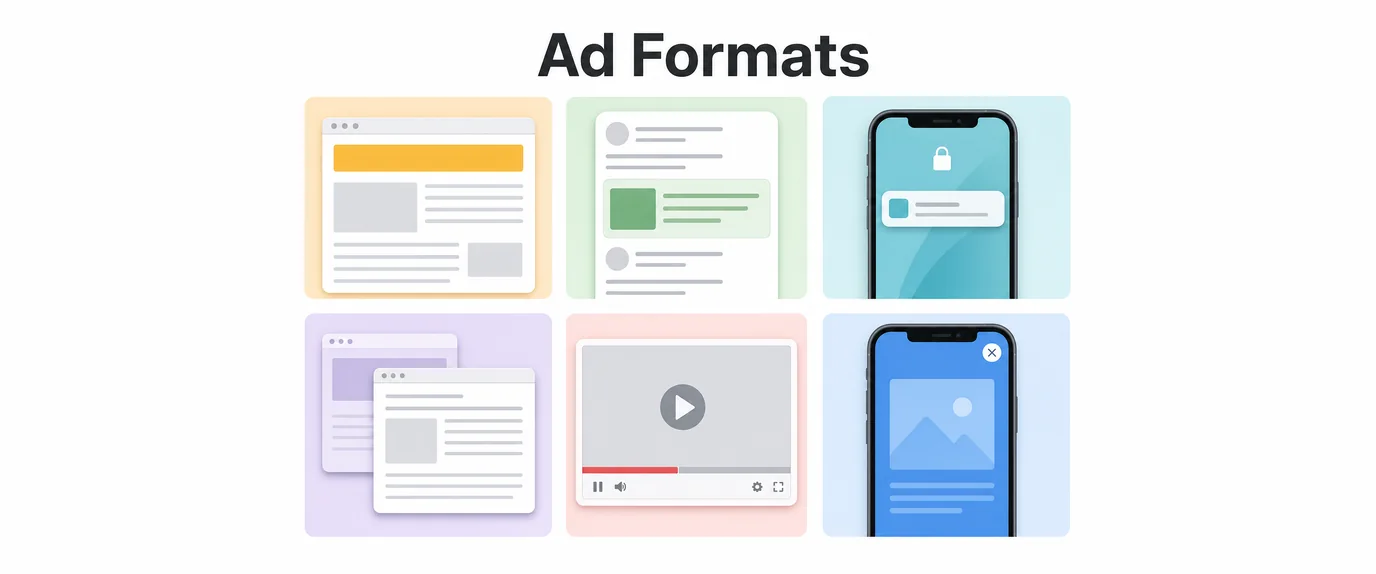
Ad formats are the different ways digital advertisements are displayed to users — as full-page redirects, notification-style alerts, banners embedded in content, or ads that blend naturally into a page’s design. Each format has its own strengths, targeting options, and ideal use cases depending on the vertical, budget, and campaign goal.
Picking the wrong format for your offer is one of the most common reasons campaigns underperform. That’s why most successful media buyers test several formats before scaling budget into one.
Main Types of Ad Formats
Popunder and Clickunder Ads
Popunder and clickunder ads open in a new browser tab or window behind the active page, so the user sees them only after closing or switching tabs. They generate massive volumes of traffic at a low cost per click, making them a favorite for sweepstakes, dating, gaming, and utility offers. Because the ad doesn’t interrupt the user’s current session, it tends to have a lower bounce rate than traditional pop-ups.
Push Ads
Push ads are notification-style messages delivered directly to a user’s device — desktop or mobile — after they’ve subscribed (often unknowingly, via a browser permission prompt). They resemble system notifications, which gives them high visibility and strong click-through rates. Push notifications work particularly well for e-commerce, finance, and app install campaigns, since they can be personalized and sent at optimal times.
Banner Ads
Banner ads are the classic, image-based rectangular ads placed within website content — headers, sidebars, or in-feed. They’re highly customizable in size and creative, and remain one of the most recognizable and trusted ad formats among users. Banners are ideal for brand awareness campaigns and retargeting, where visual storytelling matters more than an immediate click.
Native Ads
Native ads are designed to match the look and feel of the platform they appear on, blending in with articles, recommendation widgets, or social feeds. Because they don’t look like traditional advertising, native ads typically see higher engagement and lower ad fatigue. They work especially well for content-driven verticals like news, health, and finance offers.
Smartlink Advertising
Smartlink advertising isn’t a visual format but a routing technology — it automatically directs each visitor to the highest-converting offer based on their geo, device, and behavior. This removes the guesswork of manual offer selection and is especially useful for affiliates running multi-geo campaigns who want to maximize eCPM without building separate funnels for every offer.
Comparison Table: Ad Formats at a Glance
| Format | Visibility | Best For | Typical CTR | Intrusiveness |
|---|---|---|---|---|
| Popunder / Clickunder | High | Sweepstakes, dating, gaming | Medium | Medium |
| Push Ads | Very High | E-commerce, finance, app installs | High | Low–Medium |
| Banner Ads | Medium | Branding, retargeting | Low–Medium | Low |
| Native Ads | Medium–High | Content, health, finance | Medium–High | Very Low |
| Smartlink | N/A (routing) | Multi-geo affiliate campaigns | Varies | None |
How to Choose the Right Ad Format
- Define your goal. Brand awareness favors banners and native ads; direct-response offers often perform better with push or popunder traffic.
- Know your audience. Mobile-heavy verticals benefit from push notifications, while desktop users respond well to popunders.
- Test before scaling. Run small-budget tests across formats to identify the strongest CTR and conversion rate for your specific offer.
- Consider automation. If managing multiple offers and geos manually is too time-consuming, a smartlink can handle routing automatically.
- Balance intrusiveness with performance. Highly intrusive formats can drive volume but may hurt user experience and long-term brand perception.
Best Practices for Advertisers and Publishers
For advertisers, success starts with clean, well-segmented targeting and constant creative rotation to avoid ad fatigue. Platforms offering ad network solutions for advertisers typically provide granular targeting by geo, device, OS, and connection type, along with real-time analytics to optimize spend.
For publishers, the priority is maximizing revenue per visitor without degrading user experience. Working with an ad network for publishers that supports multiple formats — push, native, banner, and popunder — allows for flexible monetization strategies tailored to different traffic sources.
Advertisers running larger, programmatic budgets often turn to real-time bidding (RTB), which allows for auction-based buying across multiple traffic sources simultaneously, optimizing spend in real time based on performance signals.
Mobile app publishers, meanwhile, can integrate an Android SDK to unlock in-app monetization formats and gain deeper control over ad placement and fill rates directly within their apps.
Conclusion
There’s no single “best” ad format — the right choice depends on your vertical, audience, and campaign objective. Popunders and push ads excel at driving high-volume, low-cost traffic; banners and native ads build trust and long-term engagement; and smartlinks simplify multi-offer routing for affiliates. The smartest approach is usually a combination of formats, tested and optimized over time based on real performance data.
FAQ
What is the most effective ad format for beginners? Push ads are often recommended for beginners due to their high visibility, relatively low cost, and straightforward setup process.
Are popunder ads still effective in 2026? Yes. Popunder and clickunder ads continue to generate strong volumes of low-cost traffic, particularly for sweepstakes, gaming, and dating verticals.
What’s the difference between native ads and banner ads? Native ads blend into the surrounding content and feel less like advertising, while banner ads are clearly distinguishable visual placements with defined borders and sizes.
Do I need a smartlink if I only run one offer? Not necessarily. Smartlinks add the most value when managing multiple offers across different geos, since they automate offer selection based on visitor data.
Can publishers use more than one ad format at once? Yes, many publishers combine formats — such as push notifications alongside native widgets — to diversify revenue streams and reduce dependency on a single format