Static banners still have their place, but audiences today respond far more to ads that react, move, or invite a tap. Interactive ad formats close the gap between passive viewing and active participation, and that shift shows up directly in engagement metrics and click-through rates (CTR). This article breaks down the most effective interactive formats available today, explains how they work, and shows how advertisers and publishers can use them to get better results.
What Makes an Ad Format “Interactive”
An interactive ad format is any unit that responds to user behavior rather than simply displaying a static message. This can mean a swipeable gallery, a playable mini-game, a poll embedded inside a banner, or a push notification that opens a personalized offer. The core idea is participation: the user does something, and the ad adapts or rewards that action.
Interactive formats tend to outperform static ones because they:
- Capture attention longer, increasing viewability
- Encourage a micro-action (tap, swipe, answer) that naturally leads to a click
- Feel less like traditional advertising and more like content
- Provide advertisers with richer behavioral data for optimization
Popular Interactive Ad Formats
Push Notifications
Push ads deliver personalized, clickable messages directly to a user’s device, even when they’re not browsing a site. Because subscribers opt in, engagement rates are typically higher than with passive display formats. Segmentation by geo, device, or interest makes push especially effective for time-sensitive offers. Learn more about setting up campaigns with push ads.
Popunder and Clickunder Ads
Popunder and clickunder formats open a new tab or window behind the active browser session, so the user sees the ad only after finishing their current task. This format doesn’t interrupt browsing flow, which keeps user experience positive while still guaranteeing a full-screen impression. It remains one of the highest-volume formats for driving traffic at scale. Explore the mechanics of popunder and clickunder ads.
Native Ads
Native ad units are designed to match the look and feel of the platform they appear on, whether that’s a content recommendation widget or an in-feed placement. Because native ads blend into surrounding content, users engage with them more naturally, which typically results in stronger CTR and lower bounce rates. Read more about native ads and how they fit different verticals.
Banner Ads
Traditional banners have evolved significantly. Modern banner ads now support rich media elements like animation, embedded video, or interactive overlays, turning a once-static format into something users can engage with directly. Banners remain a reliable choice for brand visibility combined with performance goals. See the available options for banner ads.
Smartlink Advertising
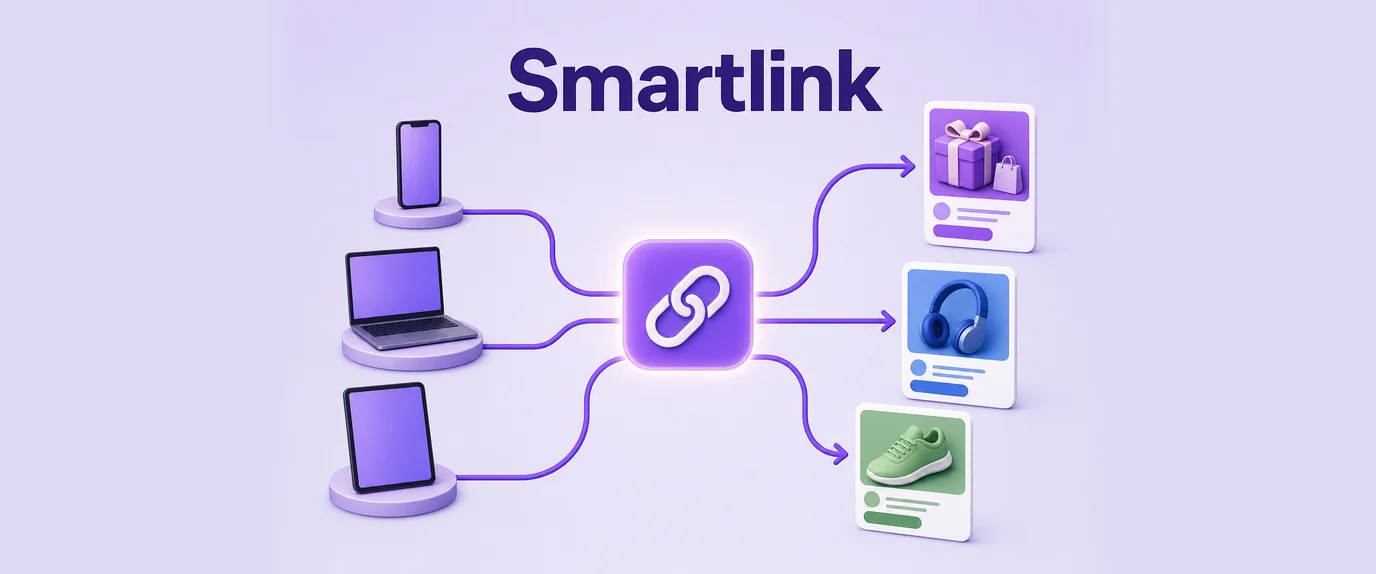
Smartlink technology automatically routes each user to the offer most likely to convert, based on real-time signals like device, geo, and browsing behavior. This removes the guesswork of manual offer selection and continuously optimizes for engagement without requiring constant manual adjustments. Learn how smartlink advertising simplifies monetization and targeting.
Comparing Interactive Ad Formats
| Format | Best For | Engagement Level | Typical Use Case |
|---|---|---|---|
| Push Notifications | Re-engagement, time-sensitive offers | High | Mobile apps, subscription-based sites |
| Popunder / Clickunder | High-volume traffic, brand exposure | Medium-High | E-commerce, gaming, entertainment |
| Native Ads | Content-heavy platforms | High | News sites, blogs, content portals |
| Banner Ads | Brand awareness with performance goals | Medium | General web traffic, retargeting |
| Smartlink | Automated offer optimization | High | Affiliate and performance marketing |
Tips to Boost Engagement and CTR
- Match format to platform. Native ads perform best on content-rich sites, while push notifications work well for apps with repeat visitors.
- Test creative variations. Even within one format, different colors, copy, and calls-to-action can shift CTR significantly.
- Use frequency capping. Overexposure to the same ad reduces engagement over time; capping impressions per user keeps creatives fresh.
- Leverage automation. Tools like smartlink reduce manual optimization work while improving conversion rates.
- Monitor real-time data. Real-time bidding gives advertisers the flexibility to adjust bids and targeting as campaigns run, rather than waiting for post-campaign reports.
For Advertisers and Publishers
Choosing the right interactive format depends on which side of the campaign you’re on.
For Advertisers
Advertisers looking to scale campaigns efficiently can combine multiple interactive formats within one platform. A dedicated ads network for advertisers provides access to global traffic sources, flexible targeting, and optimization tools in one place. For advertisers who want granular, auction-based control over pricing and inventory, real-time bidding offers a transparent way to compete for the best-performing placements as conditions change.
For Publishers
Publishers monetizing their traffic benefit from interactive formats because they typically generate higher eCPMs without harming user experience. Joining an ads network for publishers opens access to multiple interactive formats simultaneously, letting site owners test which combination performs best for their audience. Mobile app publishers specifically can integrate the Android SDK for publishers to serve interactive ads natively within their apps, improving both fill rates and user retention.
FAQ
What is the main advantage of interactive ad formats over static ads?
Interactive formats require user participation, which increases attention, viewability, and ultimately CTR compared to passive display ads.
Which interactive format works best for mobile apps?
Push notifications and native ads tend to perform best in mobile app environments because they feel integrated rather than intrusive.
Is popunder advertising still effective in 2026?
Yes. Popunder and clickunder formats continue to deliver strong volume and full-screen visibility, especially for entertainment and e-commerce verticals.
How does smartlink improve campaign performance?
Smartlink automatically directs traffic to the highest-converting offer in real time, removing manual guesswork and improving overall ROI.
Can publishers use more than one interactive format at once?
Yes. Many publishers combine push, native, and banner formats to diversify revenue streams and match different segments of their audience.
Final Thoughts
Interactive ad formats are no longer a niche experiment — they’re a core part of any strategy aiming to improve engagement and CTR. Whether you’re an advertiser looking to scale conversions or a publisher aiming to maximize revenue, testing a mix of push, native, banner, popunder, and smartlink formats — backed by real-time bidding and SDK integration — gives you the flexibility to find what actually works for your audience