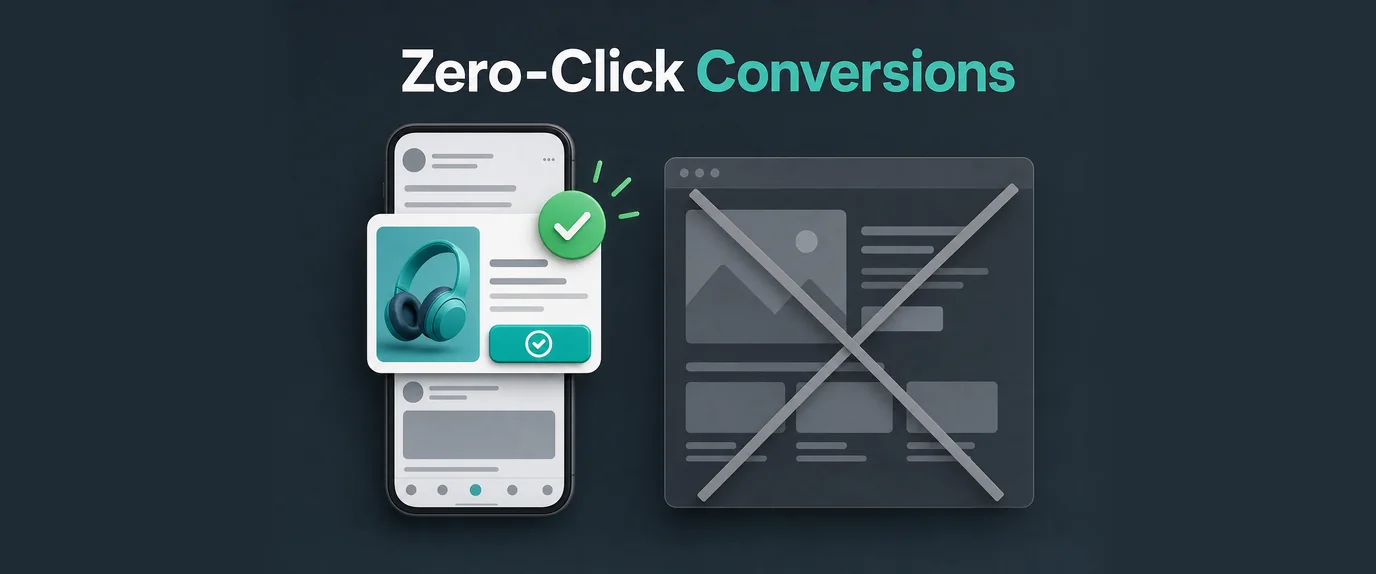
The traditional “Click -> Pre-lander -> Landing Page -> Offer” funnel is rapidly losing ground. Every extra transition represents a 20–30% loss of audience due to technical glitches, slow internet speeds, or a simple drop in interest.
The Zero-Click (or Zero-Friction) approach eliminates all intermediate steps, transforming the ad format itself into the purchase interface.
1. How It Works: The Magic of Direct API
Zero-Click technology relies on deep integration between ad formats and the user’s system data (Google/Apple/Browser Profiles).
- For Subscriptions (VPN/Antivirus): Upon clicking a Push notification, the user is presented with a system-level payment confirmation window (Apple Pay / Google Pay). The conversion happens instantly, without a single redirect to a website.
- For Lead Generation (Insurance/Finance): Browser autofill data (name, email, phone) is transmitted directly to the advertiser’s CRM via API the moment the user interacts with a native block.
2. Why Is This Beneficial for Media Buyers?
- CR (Conversion Rate) Goes Interstellar: The absence of “drop-offs” during the landing page loading phase allows for a 2x to 5x increase in lead volume from the same traffic flow.
- Hosting and CDN Savings: You no longer need ultra-fast servers for pre-landers—all the logic is shifted to the ad platform’s side and the offer’s API.
- Peak Impulsivity: Users complete the purchase at the height of their emotional response, leaving no time for a “rational filter” to kick in while waiting for a page to load.
3. Top Verticals for Zero-Click in 2026
While not every offer can be compressed into a single click, this technology has become the standard for the following niches:
- Micro-Subscriptions: VPN services, music apps, and cloud storage. 1-click payments verified via FaceID.
- Sweepstakes: Entry is confirmed via the system profile. The user doesn’t need to type their email—it is pulled automatically.
- Survey Leads: Polls embedded directly within the native ad unit. The user answers two questions in the ad body and hits “Send.”
4. Technical Challenges
Transitioning to Zero-Click requires a new skill set from media buyers:
- API Management: You must know how to configure data transmission via Postback and handle JSON requests.
- Event-Based Analytics: Since the user never visits your website, you must track performance through “Events” triggered within the ad network.
The Verdict
Zero-Click Conversions are not just a trend; they are the logical conclusion of the battle for user attention. In 2026, the winner is whoever makes the customer journey as short as possible. Landing pages will remain relevant for complex products (Real Estate, B2B), but in high-volume affiliate marketing, the future belongs to invisible funnels and instant transactions.
FAQ
1. What are zero-click conversions?
Zero-click conversions occur when users complete an action—such as making a purchase, booking a service, or submitting a lead form—directly within a platform (like search engines, social media, or apps) without visiting a traditional landing page.
2. Why are traditional landing pages losing relevance in 2026?
Platforms like Google, Meta, and TikTok now offer built-in conversion tools (instant forms, in-app checkout), reducing the need for external pages and minimizing friction in the user journey.
3. Do landing pages still have value in a zero-click world?
Yes, but their role is evolving. Landing pages are now more focused on branding, deeper engagement, SEO content, and retargeting rather than being the primary conversion point.
4. How can businesses optimize for zero-click conversions?
Businesses should leverage native platform tools (Google Business Profile, lead forms, in-app shops), optimize structured data, and ensure fast, mobile-first experiences within ecosystems where users already spend time.
5. What are the biggest challenges of zero-click conversions?
Key challenges include limited data ownership, dependence on third-party platforms, reduced control over user experience, and potential increases in advertising costs due to platform competition.