For decades, the digital advertising industry operated on a fundamentally limited premise: we fought exclusively for the user’s eyes and ears. By the mid-2020s, visual and auditory channels had become critically oversaturated. Users learned to mentally block out flashy graphics, and muted devices rendered audio triggers useless.
In 2026, the paradigm has shifted. We are no longer just fighting for visual real estate; we are fighting for tactile response. Thanks to revolutionary updates in browser protocols (like the advanced Web Haptics API) and deep, seamless integration with the booming ecosystem of wearable devices, both classic Push Ads and modern In-Page Push formats have found a powerful second wind.
Here is how the integration of touch has transformed digital marketing from a passive viewing experience into an intimate, physical interaction.
1. Haptic Push: Advertising You Can Feel
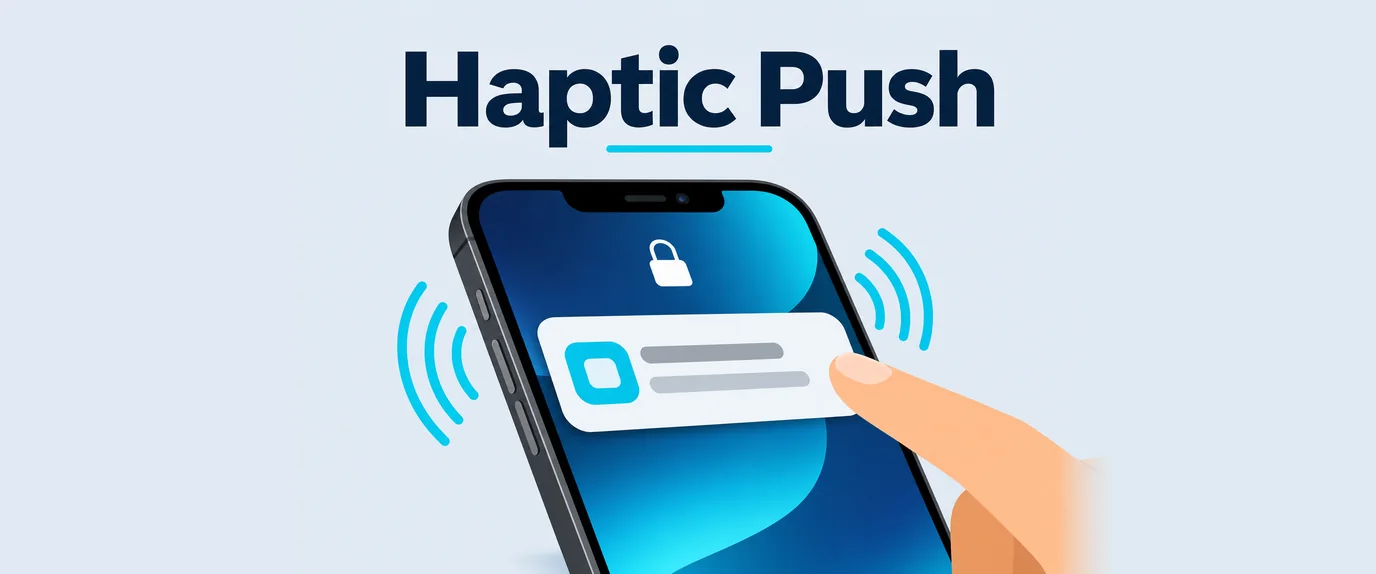
The most significant technological breakthrough of 2026 in the realm of direct-to-device marketing is the Haptic Response protocol. Media buyers and affiliate networks can now program specific, nuanced device vibrations to trigger at the exact moment a notification is delivered.
Why is this necessary?
Standard notification sounds or generic, monotone vibrations are frequently ignored; they are lost in the endless daily stream of WhatsApp messages, calendar reminders, and system alerts. However, custom haptics create an immediate, physical disruption that demands attention.
How it works:
A sophisticated pattern for the smartphone, smartwatch, or AR controller’s linear resonant actuator (vibration motor) is embedded directly into the push notification’s payload code.
- iGaming Offers: The user feels a distinct, rapid “rumble” followed by a staggered rhythm that perfectly mimics the physical clinking of coins dropping into a slot machine tray.
- Dating Verticals: The device pulses in the pocket with a soft, rhythmic, and intimate double-thump—a literal “heartbeat.”
- E-commerce: A quick, sharp “snap” mimicking a physical cash register closing to indicate a flash sale.
The Result: The user feels a unique, unfamiliar physical signal and instinctively reaches for their device. This biological curiosity separates your ad from the noise, driving Open Rates up by a staggering 45% compared to non-haptic campaigns.
2. In-Page Push 2.0: From Banner to Interactive “Mini-App”
In the past, In-Page Push was merely a stylized alert box hovering awkwardly in the corner of a webpage. In 2026, it has evolved into a fully-fledged Interactive Overlay—a layered, dynamic interface that behaves like a native, integral part of the website rather than a bolt-on ad.
- Adaptive OS Layout: Modern In-Page blocks utilize real-time user-agent parsing to mimic the system UI of the specific OS the user is running. If a user is on iOS 19, the overlay adopts the exact blur effects, corner radii, and typography of Apple’s ecosystem. On Windows, it mirrors the sharp, frosted-glass aesthetics of a system prompt. It achieves pixel-perfect camouflage.
- Zero-Click Micro-Interactions: The true revolution lies in functionality. Users no longer need to click a link to be redirected to a slow-loading landing page. Instead, they can spin a prize wheel, browse a product carousel, input their email, or answer qualification quiz questions directly inside the In-Page notification body. The conversion happens within the ad itself.
This seamless functionality bridges the gap between traditional Banner advertising and robust mobile apps, keeping the user actively engaged without interrupting their browsing session.
3. Behavioral Synchronization: The Art of Timing
Timing has always been the Achilles’ heel of intrusive marketing. In 2026, an In-Page Push doesn’t blindly trigger “5 seconds after landing.” Instead, it is governed by predictive AI that identifies a cognitive lull.
The Mechanics of the Pause:
Using localized machine learning, the browser analyzes the user’s reading cadence, scrolling velocity, and media consumption. The algorithm waits until the user has finished reading a key block of text, reached the bottom of an article, or watched a video to completion.
At that precise microsecond—when the user’s active attention is momentarily freed and their brain is looking for its next dopamine hit—the In-Page Push smoothly emerges.
The Psychological Impact:
By synchronizing the ad delivery with the user’s natural breathing room, you drastically reduce the Bounce Rate. The advertisement is reframed subconsciously. It is no longer an aggressive interruption; it is a timely, helpful suggestion. While raw volume formats like Popunder and clickunder ads remain excellent for aggressive reach, Behavioral Overlays are the undisputed champions of high-intent, premium engagement, operating with the subtlety of top-tier Native Ads.
Format Comparison: Classic vs. 2026
| Parameter | Classic Push (2024) | Haptic & Interactive Push (2026) |
| Primary Signal | Sound / Text alert | Unique Haptic Vibration Patterns |
| Interaction Depth | Simple URL Click only | Micro-games, forms, Zero-Click checkout |
| Delivery Success | Often blocked by OS updates | Bypasses blocks via Native System APIs |
| User Context | Interruptive, time-based | Synchronized with cognitive lulls |
| Average CTR | 0.8% – 1.5% | 4.0% – 7.5% |
Detailed Summary: The Evolution of “Touch”
In 2026, Push and In-Page Push formats have permanently graduated from being classified as “cheap and dirty” remnant traffic. They have transformed into sophisticated, high-tech tools designed for critical micro-moments.
Here is what this means for a media buyer’s overarching strategy:
- Sensory Marketing & Vibration Design: It is no longer enough to write compelling copy or source a high-resolution icon. You must strategically consider how that message physically “resonates” in the user’s hand. Forward-thinking brands and affiliate teams are now hiring “vibration designers.” This is not a gimmick; it is a vital necessity to stand out in a world where every piece of glass and plastic normally vibrates exactly the same way.
- Deep Gamification: The In-Page Push is now a full-scale miniature sales funnel. If you haven’t integrated a simple choice, swipe, or gaming mechanic, you are leaving 60% of potential engagement on the table. Users today want to play, not just buy. Give them a compelling micro-game where the ultimate prize is a localized discount or purchase.
- Respecting the Pause: The undisputed winners in 2026 are those who have taught their scripts patience. Advertising that forcefully “interrupts” in the middle of a task is dead and heavily penalized by user algorithms. Advertising that appears like a butler holding a tray during a sigh of relief is priceless.
- Dynamic Traffic Routing: Because haptic feedback relies on device capabilities, utilizing a robust Smartlink is more critical than ever. A Smartlink will automatically detect if a user’s device supports advanced haptics and route them to a tactile-heavy offer, while seamlessly redirecting legacy devices to visually-optimized classic landers, ensuring zero wasted traffic.
The Verdict
In 2026, Push formats are defined entirely by tactility and timing. If you can learn to literally “touch” the user through the screen and the haptic motor at the perfect psychological moment, you will gain access to the most direct, intimate, and high-converting sales funnel that has ever existed in the history of affiliate marketing.
FAQs
1. What are haptic ads?
Haptic ads are next-generation interactive advertising formats that utilize touch-based physical feedback—such as vibrations, rhythmic pulses, and localized pressure patterns—on devices like smartphones, smartwatches, and AR controllers. They are designed to dramatically increase user engagement, break through digital fatigue, and trigger an immediate emotional and biological response.
2. How do behavioral overlays use touch feedback?
Behavioral overlays intelligently integrate haptic signals with user interface actions. Rather than vibrating randomly, they trigger tactile responses based on specific behaviors—such as feeling a satisfying “click” when scrolling past a product, or a subtle pulse when successfully dragging and dropping an item within the ad. This subtly guides the user’s attention and positively influences their subconscious decision-making process.
3. Are haptic ads effective for conversion rates?
Absolutely. Extensive industry testing in 2026 shows that adding physical tactile feedback improves brand recall by up to 60%, significantly increases active engagement time, and routinely doubles conversion rates. By creating a physical memory associated with the brand messaging, the brain registers the ad as a tangible “experience” rather than just pixels on a screen.
4. What devices support haptic advertising in 2026?
Virtually all hardware in 2026 is equipped for this ecosystem. This includes modern iOS and Android smartphones featuring advanced linear motors, all tiers of smartwatches, VR/AR headsets, haptic-enabled gaming controllers, and various wearable tech platforms that support programmable Web Haptics APIs utilized by advertising delivery systems.
5. Are there privacy concerns with tactile marketing?
Yes, concerns include biometric-style behavioral tracking, as reading a user’s physical response (such as device grip pressure or interaction speed) borders on physiological data collection. To combat this, 2026 web standards require strict “Haptic Consent” protocols. Users must opt-in to advanced tactile interactions, and ad networks employ decentralized, localized processing to ensure sensitive behavioral data never leaves the user’s device