2025 is shaping up to be the most transformative year in digital media buying since programmatic first appeared.
AI, privacy, the death of cookies, new ad formats, and the blending of commerce + media are rewriting the playbook.
Let’s break down what’s booming, what’s fading, and where smart buyers should focus to stay ahead.
Why 2025 Matters More Than Ever
Advertising spend is rebounding worldwide — but the rules have changed.
According to multiple global reports (Dentsu 2025 Forecast, Mediaocean Ad Outlook, GroupM This Year Next Year):
- Global ad spend is projected to grow ~6 %, but digital will account for over 73 % of that.
- Privacy, AI and sustainability have become boardroom topics, not buzzwords.
- Affiliate and performance buyers are under pressure to prove ROAS, not just clicks.
- Media fragmentation – from TikTok Shorts to Amazon Ads to CTV – means audiences are everywhere, and attention is fleeting.
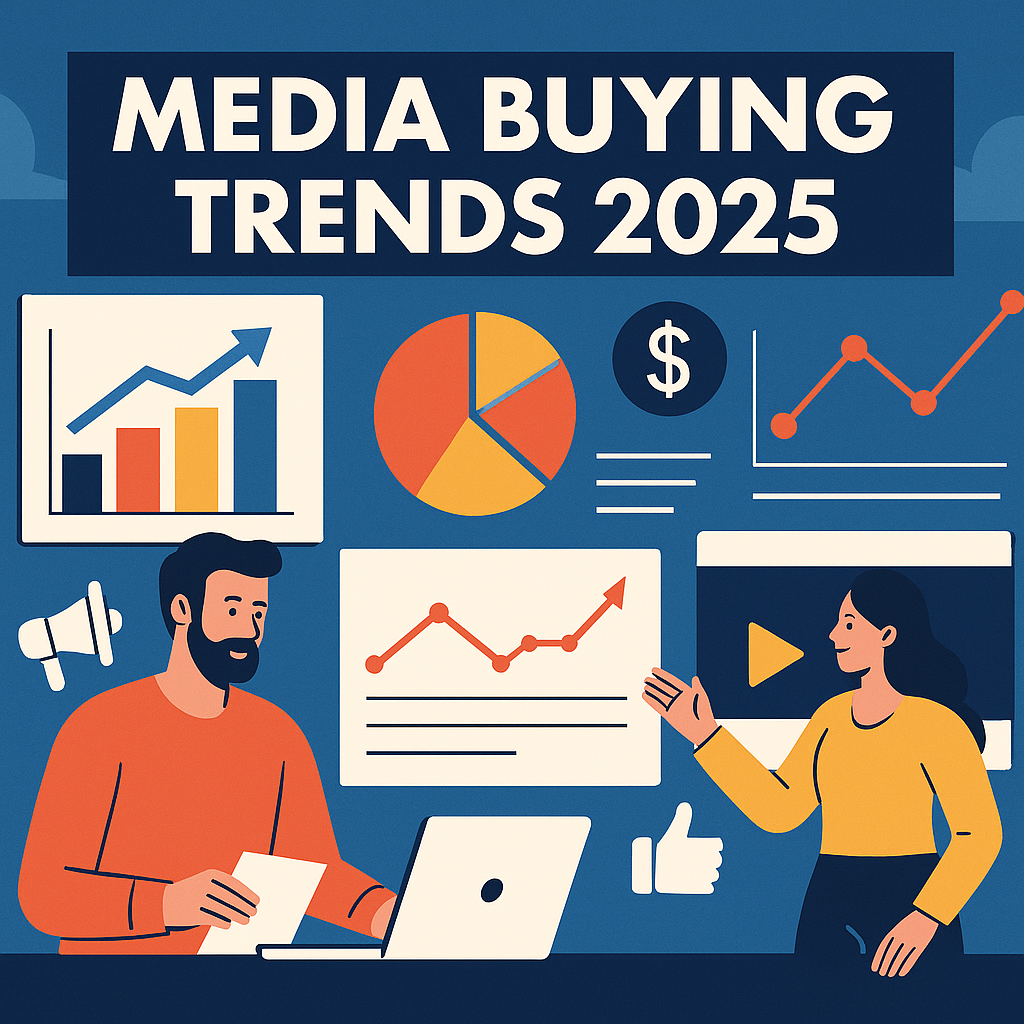
WHAT’S HOT IN MEDIA BUYING 2025
1. Connected TV (CTV) & Streaming Boom
The golden era of connected TV advertising is here.
With cord-cutting accelerating and smart-TV ownership passing 90 % in many markets, brands are shifting billions from linear to CTV.
Why it’s hot:
- CTV combines TV-level impact + digital precision.
- Targeting by audience segment & viewing behavior.
- Measurable reach and real-time attribution.
- New ad formats: interactive video ads, shoppable CTV, pause ads.
Example: Brands like Nike and DoorDash run “shoppable” CTV ads that let viewers order products directly from the screen.
Pro tip: Treat CTV like a performance channel, not just a branding tool. Tie view-through data to site traffic and conversions.
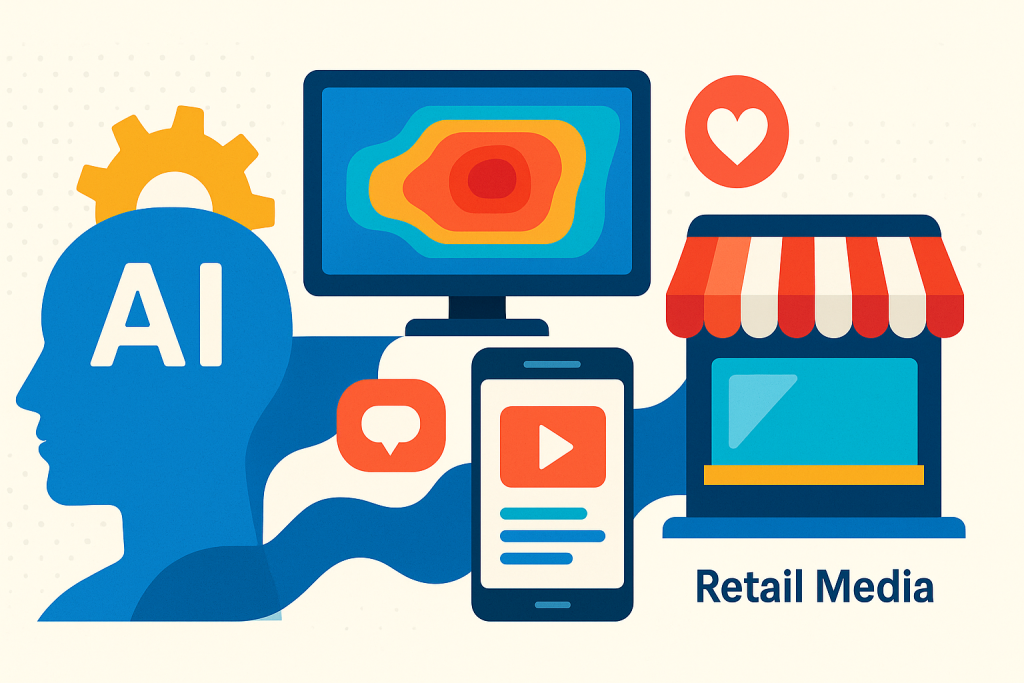
2. Retail Media — The Third Big Wave
After search and social, retail media is the next billion-dollar frontier.
Walmart, Amazon, Target, Instacart, Best Buy — all offer brands ad placements backed by first-party purchase data.
Why it’s hot:
- Access to “ready-to-buy” audiences.
- Clean first-party data and closed-loop measurement.
- Integration of ads with actual sales data = true ROI proof.
Trend: Smaller retailers and D2C brands are launching their own media networks — expect hundreds of “mini-retail media platforms” by 2026.
Pro tip: Even affiliates can leverage this trend by partnering with retailers offering API-based ad placements or co-op campaigns.
3. AI-Driven Buying & Creative Automation
Artificial Intelligence is no longer a future tool — it’s the core of modern media buying.
Where AI is making impact:
- Predictive budget allocation based on real-time ROAS.
- Automated creative generation & personalisation.
- Smarter bidding algorithms for programmatic ads.
- AI-based content matching and brand safety scoring.
Example: Media agencies use AI co-pilots that suggest bid adjustments and creative changes on the fly.
Pro tip: Use AI as a scalpel, not a hammer. Automate data and testing, but let humans control storytelling and context.
4. Omnichannel & Cross-Platform Measurement
As user journeys span five screens and ten touchpoints, brands can’t afford data silos.
2025 is the year of “total media attribution.”
Hot developments:
- Cross-device tracking post-cookie.
- Multi-touch attribution models built on AI.
- Clean rooms for privacy-safe data sharing.
Pro tip: Invest in a single dashboard that aggregates all media performance — from TikTok to CTV to in-store sales. Buyers who see the whole picture spend smarter.
5. Sustainability & Ethical Media Buying
Sustainability isn’t just a CSR line — it’s a filter in 2025 media plans.
Agencies and brands increasingly choose to buy from “green” publishers and use carbon-neutral ad servers.
Why it matters:
Consumers reward brands that align with values.
Media groups such as GroupM and Publicis pledged to cut ad supply-chain emissions by 50 % by 2026.
Pro tip: Audit your supply path — ask partners for carbon impact reports. It’s becoming a competitive advantage.
WHAT’S NOT HOT IN 2025
1. Blind Programmatic Buying
Unverified inventory and low-quality sites drain budgets.
Buyers are moving toward curated marketplaces and “direct-to-publisher” deals to avoid fraud and bot traffic.
Pro tip: Transparency beats scale. Fewer, higher-quality placements outperform massive blind buys.
2. Cookie-Based Targeting Dependence
By mid-2025, Chrome will phase out third-party cookies completely.
Legacy audience targeting methods will fade away.
Instead: contextual signals, first-party data and clean-room matching are the future.
Pro tip: Start testing cookie-free audience solutions now — waiting means losing accuracy later.
3. Mass Reach Without Relevance
Blanket TV or broad display campaigns with no data layer are underperforming.
Buyers now prioritize “attention per impression” over raw CPM.
Pro tip: Plan fewer placements but add interaction — video, shoppable formats, stories, immersive experiences.
4. Static Creatives & One-Size-Fits-All Messaging
Ads that look the same everywhere feel invisible.
Dynamic creative optimisation (DCO) and adaptive storytelling win eyeballs.
Example: A travel brand runs 50 versions of a banner auto-adjusted by destination, season, and device — CTR up 40 %.
5. Ignoring Privacy and Brand Safety
Ignoring privacy rules like GDPR and CCPA in buying strategies is a ticking bomb.
Also, brands that appear next to harmful content risk public backlash.
Pro tip: Use pre-bid filters, brand-safety partners, and transparent SSPs. Compliance = trust + profit.
Emerging Trends to Watch
🔸 Attention Metrics Over Impressions
Advertisers shift from CTR/CPM to attention-based KPIs — how long users actually look at an ad.
New players like Lumen and Amplified Intelligence lead this space.
🔸 Social Video as a Buying Powerhouse
Short-form video remains dominant: TikTok, YouTube Shorts, Instagram Reels.
Creative + placement synergy is key — vertical format, sound on, native style.
🔸 Affiliate and Performance Convergence
Affiliate marketers now act like media buyers, and vice versa.
Hybrid campaigns mix programmatic display + influencer + CPC affiliate placements under one ROAS umbrella.
🔸 Contextual AI Targeting
Machine learning reads page context in milliseconds and serves the most relevant ads — privacy-friendly and effective.
Expect a renaissance of contextual advertising 2025-2026.
How to Adapt Your Media Buying Strategy
- Redefine KPIs: Move beyond CTR — track attention, viewability, and incremental sales.
- Blend Brand + Performance: The lines blur — CTV and social can build awareness and drive sales simultaneously.
- Build First-Party Data: Collect emails, opt-ins, loyalty signals to own your audience.
- Automate Wisely: Use AI for bid management and creative testing, but human judgment for context and tone.
- Invest in Measurement: Adopt multi-touch attribution and post-purchase analytics.
- Plan for Privacy: Test cookieless solutions, use clean rooms, audit data partners.
- Allocate 10–15 % Budget for Experimentation: Emerging channels often deliver the best ROI early.
- Partner Smarter: Work with agencies and tech vendors who offer transparency and cross-channel integration.
Final Outlook: 2025
Media buying is becoming a fusion of science and art.
Buyers who embrace AI, data ethics and creative fluidity will own the future.
Those clinging to old metrics and opaque deals will fade fast.
In 2025, media buying is evolving faster than ever. Programmatic advertising, AI-driven targeting, and cross-platform campaigns dominate the landscape, offering unprecedented precision and efficiency. Brands focusing on immersive formats, influencer partnerships, and privacy-first strategies are seeing the best ROI. Meanwhile, traditional methods like untargeted display ads and generic email blasts are declining in effectiveness. Staying ahead means embracing data-driven decision-making, experimenting with emerging platforms, and continually optimizing campaigns for engagement and conversions.
Table: Media Buying Trends 2025 – Hot vs. Not
| Hot Trends | Declining/Not Trends |
|---|---|
| Programmatic & AI-powered ads | Untargeted display ads |
| Influencer & creator collaborations | Generic email marketing |
| Cross-platform campaigns | Single-platform campaigns |
| Privacy-first and consent-based targeting | Ignoring user privacy |
| Interactive & immersive ad formats | Static banner ads |
| Short-form video & social commerce ads | Long, unengaging video content |
| Data-driven optimization | “Set and forget” campaign strategies |
FAQs
1. What is programmatic media buying, and why is it popular in 2025?
Programmatic media buying uses AI and automation to purchase ads in real-time, enabling precise targeting and better ROI. Its popularity is rising due to efficiency and scalability.
2. How is privacy impacting media buying trends?
With stricter data regulations, privacy-first approaches are critical. Brands must respect consent and use anonymized data to maintain trust and avoid penalties.
3. Are traditional display ads still effective in 2025?
Standard, untargeted display ads are declining. Brands achieve better results through personalized, immersive, and cross-platform strategies.
4. What role do influencers play in media buying?
Influencer and creator collaborations drive engagement and trust, particularly among younger audiences, making them a key trend in 2025.
5. Which ad formats are most effective now?
Interactive ads, short-form videos, and social commerce campaigns perform best, while static banners and long, unengaging videos are losing traction.