Introduction
In the fast-moving world of digital marketing, traffic is the lifeblood of every campaign. Among various paid traffic sources, pop traffic has maintained its relevance for decades due to its simplicity, scale, and affordability.
Although often perceived as intrusive, pop ads continue to drive strong performance results when used strategically. This article explores what pop traffic is, how it works, and how marketers can leverage it effectively in 2025.
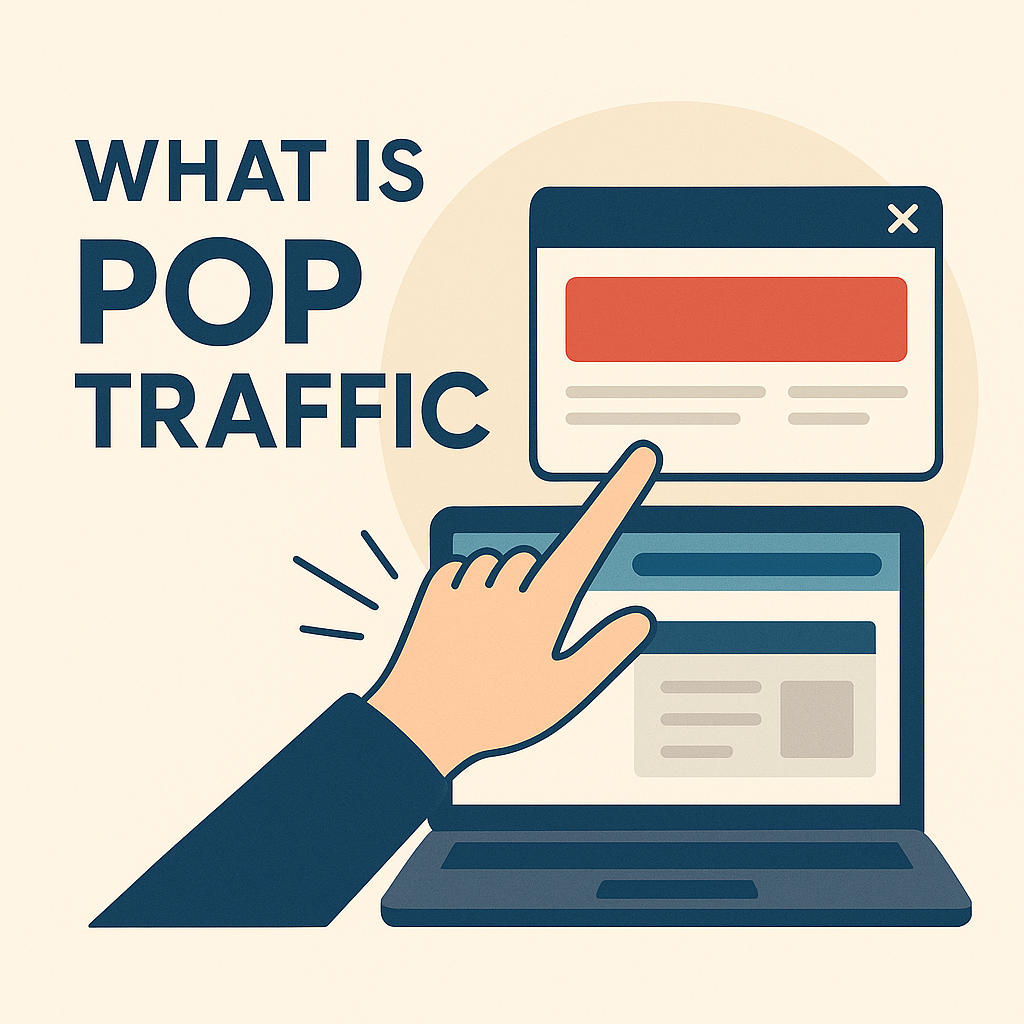
What Is Pop Traffic?
Pop traffic comes from ads that automatically open a new browser window or tab when a user visits or interacts with a website.
There are two main types:
- Pop-up ads, which open on top of the active browser window.
- Pop-under ads, which open behind the current tab and appear once the user closes or minimizes the main window.
Both aim to instantly capture attention and direct users to a specific offer, product, or service.
This ad type belongs to interstitial advertising, allowing brands to reach audiences outside traditional ad placements such as banners or native widgets.
How It Works
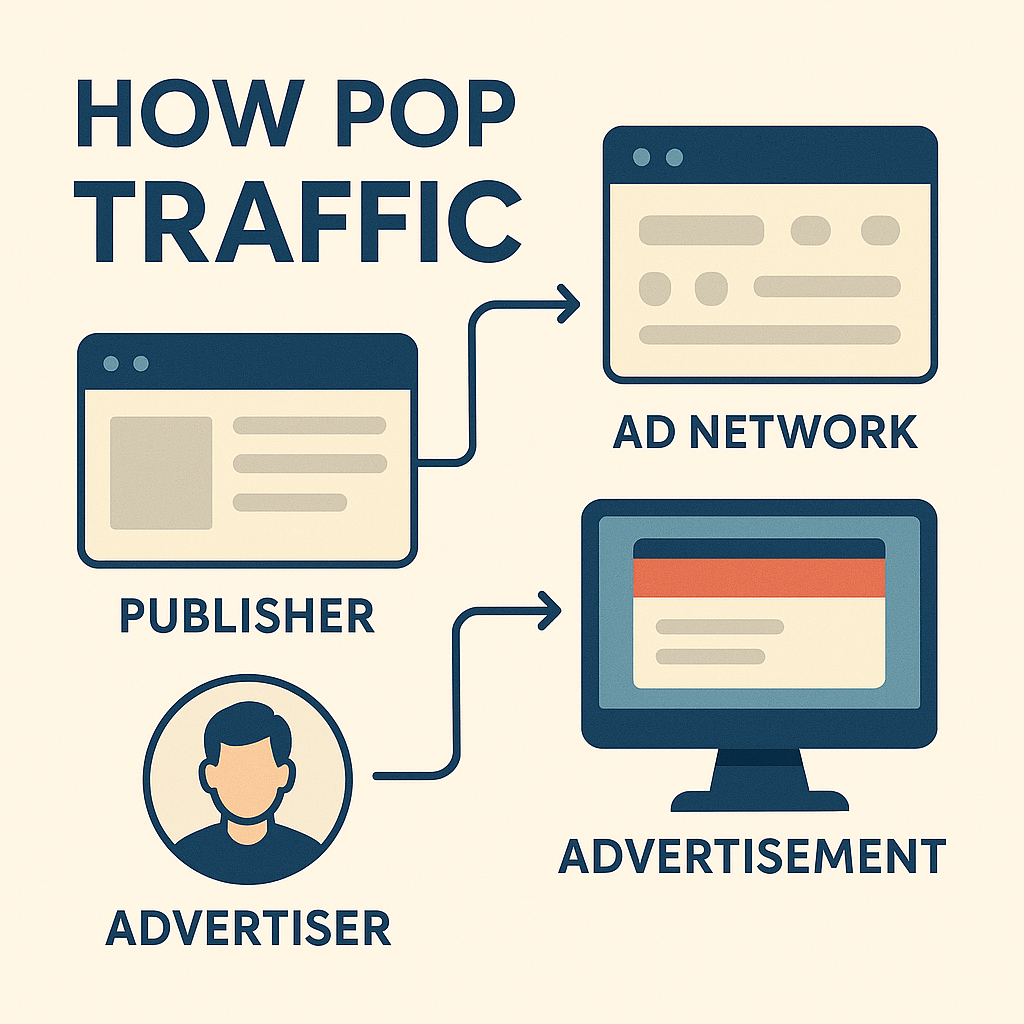
When a user visits a site using pop monetization, a script triggers an event that opens a new page — the advertiser’s landing page.
Here’s how the process typically unfolds:
- Publisher — the website that allows pop ads and earns revenue for impressions or clicks.
- Ad Network — connects publishers and advertisers, providing real-time bidding systems.
- Advertiser — the marketer or brand promoting an offer.
- Tracking Tools — monitor user actions, conversions, and ROI.
The advertiser defines targeting settings (location, device, OS, browser, time zone, etc.) and sets bids per view. The result: your offer instantly appears to real users worldwide.
Pricing Models
Pop advertising uses several pricing models:
- CPV (Cost per View) – pay for each pop event.
- CPC (Cost per Click) – pay when users interact.
- CPA (Cost per Action) – pay only for desired outcomes such as sign-ups or installs.
- Dynamic CPM – adjusts bids automatically based on performance.
Because of its low entry cost, pop traffic is often used for large-scale campaigns, funnel testing, and offer validation.
Advantages
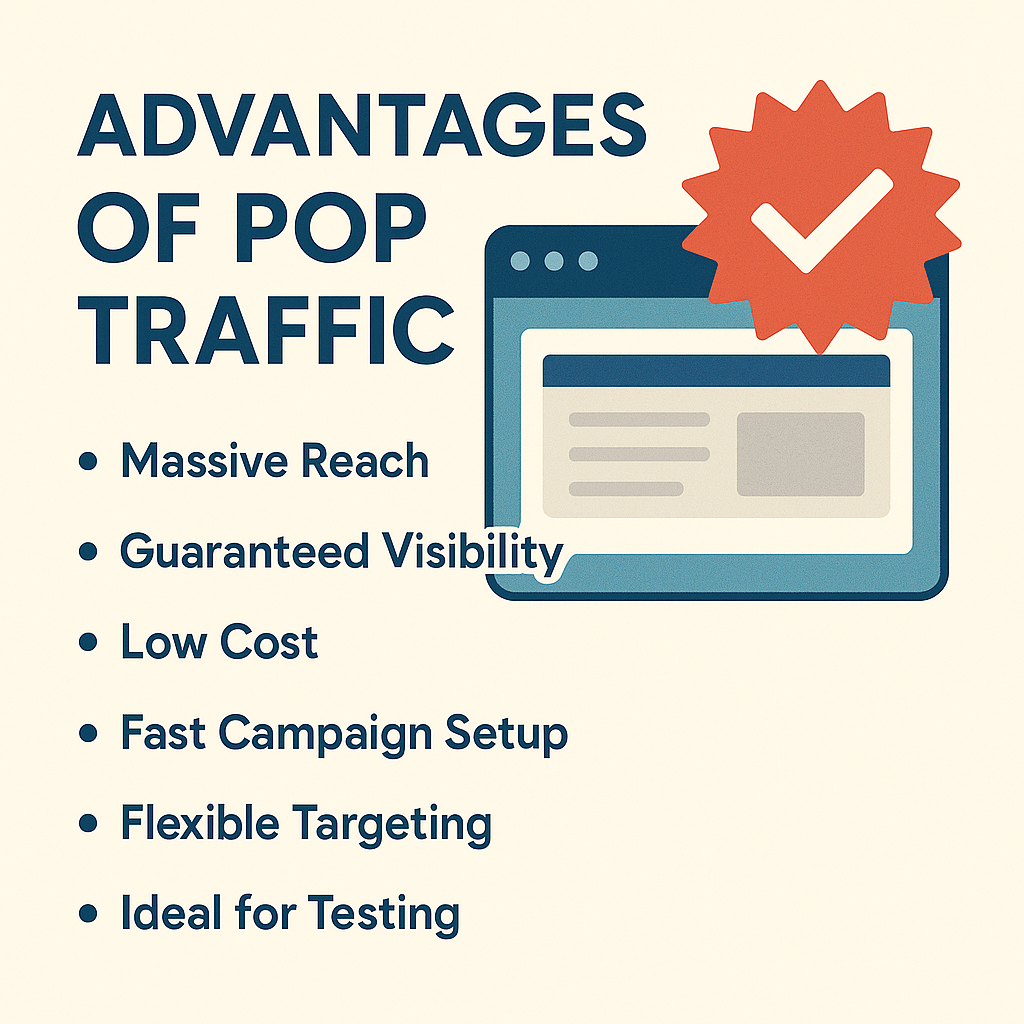
- Massive Reach: Pop traffic provides billions of daily impressions across global publishers.
- Guaranteed Visibility: Every ad opens a new page — ensuring users see your offer.
- Low Cost: CPV rates are among the lowest in digital advertising.
- Fast Campaign Setup: Launch a campaign in minutes and start gathering data immediately.
- Flexible Targeting: Options include location, device type, OS, time of day, and more.
- Ideal for Testing: Excellent for testing creatives, landing pages, and conversion flows before scaling.
Limitations
- Lower User Intent: Users don’t always expect the ad, so conversion intent can be low.
- Ad Blockers: Some browsers limit pop events.
- Traffic Quality: As with all mass traffic, filtering is necessary to maintain quality.
- Compliance Rules: Some verticals restrict pop usage due to strict advertising regulations.
- User Experience: Excessive or poorly designed pop ads can irritate visitors.
Where Pop Traffic Performs Best
Pop ads perform especially well in industries focused on simple, fast conversions, such as:
- Mobile app promotions
- Utility tools and software
- Online dating and entertainment
- Sweepstakes and surveys
- VPN or data protection products
These verticals rely on large traffic volumes and quick user actions.
Pop Traffic vs. Other Formats
| Metric | Pop Traffic | Push Ads | Native Ads |
|---|---|---|---|
| Cost | Very Low | Low-Medium | Medium |
| Volume | Extremely High | High | Moderate |
| User Intent | Low | Medium | High |
| Setup Speed | Very Fast | Fast | Moderate |
| Best For | Testing & scaling | Engagement | Brand building |
Pop traffic is unbeatable for scaling and testing, while other formats excel in engagement and branding.
Best Practices for Marketers
- Use a Pre-Landing Page: Warm up users before sending them to the main offer.
- Optimize First Screen: Your headline and call-to-action should immediately communicate value.
- Run Continuous A/B Tests: Experiment with copy, creatives, and targeting to refine results.
- Track Everything: Use analytics to identify profitable zones and filter low-quality traffic.
- Segment by Device and GEO: Performance varies significantly across regions and platforms.
- Respect UX and Compliance: Avoid aggressive formats that may harm your brand image.
Evaluating Performance
Key metrics for success include:
- CTR (Click-Through Rate)
- CR (Conversion Rate)
- ROI (Return on Investment)
- EPV (Earnings per Visit)
- CPV (Cost per Visit)
- Zone Performance (Publisher-Level Data)
Monitoring and optimization based on these metrics determine long-term profitability.
The Future of Pop Traffic
Even as browsers evolve and ad-blocking increases, pop traffic continues to adapt.
Modern ad platforms integrate smart bidding algorithms, fraud detection, and user-friendly formats to improve both quality and compliance.
In the near future, pop advertising will likely remain a key testing and scaling tool for performance marketers — provided it’s used ethically and strategically.
Conclusion
Pop traffic is a powerful, yet often overlooked, advertising channel for digital marketers seeking high-volume reach at a low cost. While it comes with challenges such as lower engagement rates and potential ad fatigue, its effectiveness lies in strategic targeting, compelling creatives, and constant optimization. By understanding the nuances of pop traffic sources, ad networks, and best practices, marketers can leverage this traffic type to boost conversions, expand their audience, and maximize ROI. Always test, track, and refine your campaigns to make the most of pop traffic in your marketing strategy.
| Key Takeaways | Insights |
|---|---|
| High Volume & Low Cost | Pop traffic delivers large audiences at an affordable price. |
| Creative Importance | Eye-catching creatives significantly improve engagement. |
| Targeting is Crucial | Geo, device, and behavioral targeting enhance results. |
| Testing & Optimization | Continuous A/B testing boosts conversion and ROI. |
| Potential Risks | Can generate low-quality clicks if not properly managed. |
FAQs
- What is pop traffic?
Pop traffic refers to web visitors generated through pop-under or pop-up ads that appear on a user’s screen, typically outside the main browser window. - Is pop traffic suitable for all types of campaigns?
Pop traffic works best for direct response campaigns, CPA offers, and promotions that benefit from high-volume exposure, but may be less effective for brand awareness campaigns. - How can I improve pop traffic campaign performance?
Optimize creatives, use precise geo and device targeting, implement frequency caps, and continuously monitor analytics for conversions. - Are pop traffic ads expensive?
Pop traffic is generally low-cost compared to display or native ads, but pricing varies based on geo, ad network, and targeting parameters. - Which ad networks are best for pop traffic?
Top pop traffic networks include PopAds, PopCash, and PropellerAds, among others. Selection should depend on campaign goals, targeting options, and traffic quality.