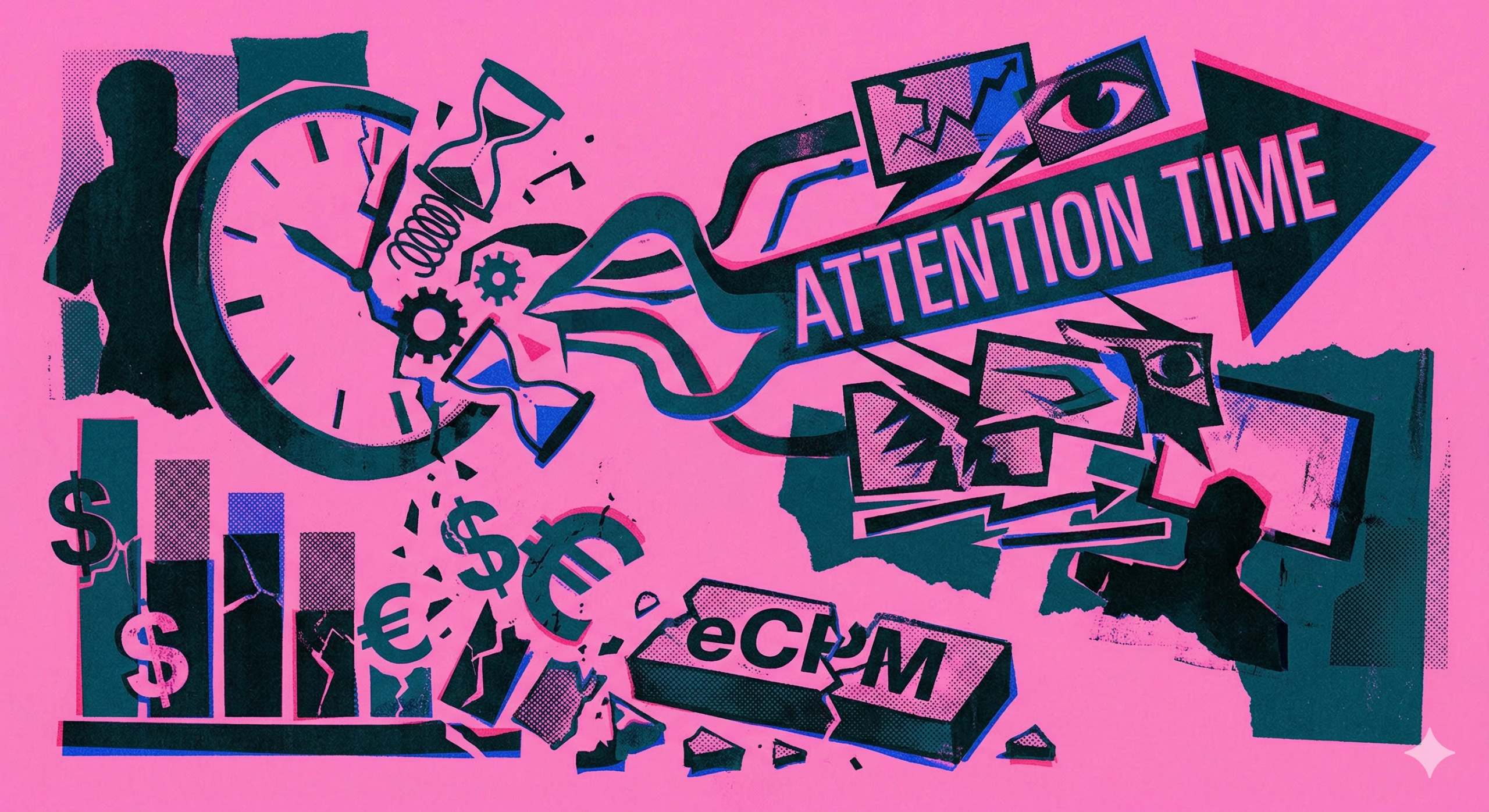
For a long time, eCPM (effective cost per mille) was considered the gold standard. However, this metric has a “dark side”: it encourages aggressive formats that annoy users and force them to close the site.
In 2026, advertisers have grown much smarter. Thanks to Eye-Tracking technologies (powered by browser-based neural networks) and Advanced Viewability, they can see whether a user actually looked at a banner or simply scrolled past it. Now, they are willing to pay 5x more for 10 seconds of real attention than for 100 “empty” impressions.
What are Attention Metrics?
Instead of the binary “seen / not seen” approach, we now use qualitative indicators:
- Viewable Dwell Time: How many seconds the ad unit remained in the active visible zone of the screen.
- Interaction Quality: Whether the user hovered their cursor or paused their scroll at the banner level.
- Attention Index (AI): The ratio of content reading time to the time the ad was in the frame.
2026 Insight: Sites with low eCPM but high dwell time (long-form articles, guides) are now earning more than news portals with “insane” traffic and split-second visits.
How to Set Up Ad Placements: UX Design for Pros
The main secret of 2026 is that advertising should not interfere with reading; it should accompany it. If you interrupt a user mid-sentence, they experience cognitive dissonance and subconsciously “erase” your advertisement from their memory.
1. “Lazy” Native Blocks (Lazy Native)
Instead of loading all banners at once, use scripts that activate the ad only when the user slows down their scroll.
- The Result: The ad appears exactly when the user’s focus of attention is free.
2. Sticky Blocks with “Smart” Waiting
Sidebars in 2026 have become dynamic. A banner doesn’t just sit there; it “waits” for a pause in reading and smoothly changes content or brightness when the user reaches the logical end of a paragraph.
3. Integration into “Resting Points”
Place ads where the user’s eye naturally pauses:
- Under section headings (H2, H3).
- Next to infographics and key quotes.
- At the end of the article, when the dopamine level from the received information is at its peak.
Comparison: Old School vs. The Attention Economy
| Parameter | eCPM Model (Old School) | Attention Model (2026) |
| Priority | Number of impressions | Duration of contact |
| Placement | Aggressive (Pop-ups, Interstitials) | Native (In-content, Contextual) |
| User Attitude | Irritation / AdBlock | Natural perception |
| Cost for Advertiser | Low (paying for “dust”) | High (paying for results) |
| Publisher Income | Falling due to base burnout | Growing due to traffic quality |
How to “Sell” Attention to Advertisers?
If you are a publisher, your 2026 media kit should start with Average Attention Per Page rather than traffic volume.
- Install Attention Measurement Scripts: Use open-source libraries or specialized SDKs that record time-in-view.
- Segment Your Inventory: Identify “High Attention” zones (where users linger for 15+ seconds) and sell them via Private Marketplaces (PMP) with a 200–300% markup.
- Optimize Speed: Remember, every extra 0.1s of banner load time eats 1% of attention. In 2026, fast ads = expensive ads.
The Bottom Line
The era of “clickable trash” is over. In 2026, the winners are publishers who respect their readers’ time. By creating an environment where ads complement content rather than fight it, you transition from “selling pixels” to “selling influence.”
Don’t sell impressions. Sell the time during which your brand partner owns the user’s mind.