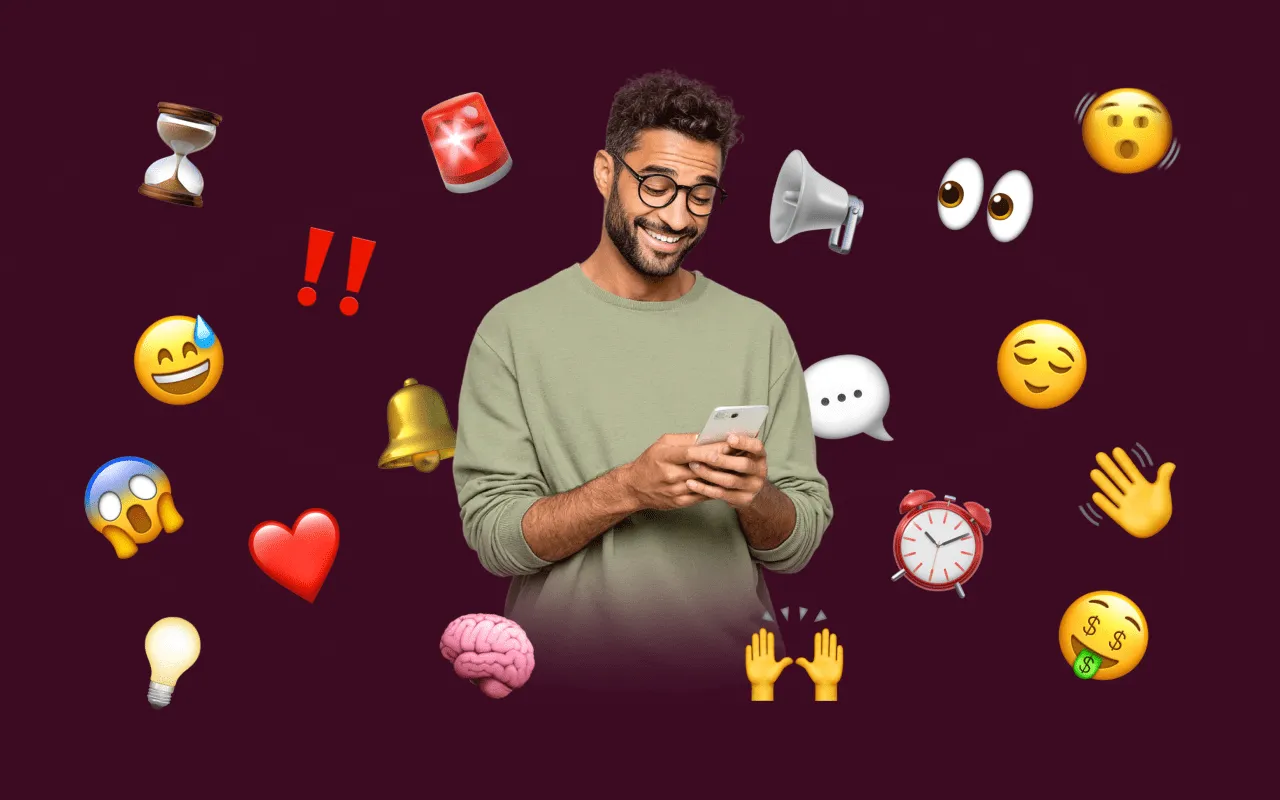
By 2026, the average smartphone user receives between 50 and 100 notifications every single day. Over time, humans have developed a flawless reflex: see a pop-up, swipe it away without even looking. This process takes a fraction of a second and happens entirely on autopilot.
Your job as a marketer is not just to send a message, but to break this pattern. You need to make the user’s finger hesitate and tap the notification instead of flicking it into the digital abyss.
In this article, we break down the anatomy of a click and the psychological triggers that wake up the user’s “lizard brain” and force a reaction.
The 0.5-Second Decision: How It Works
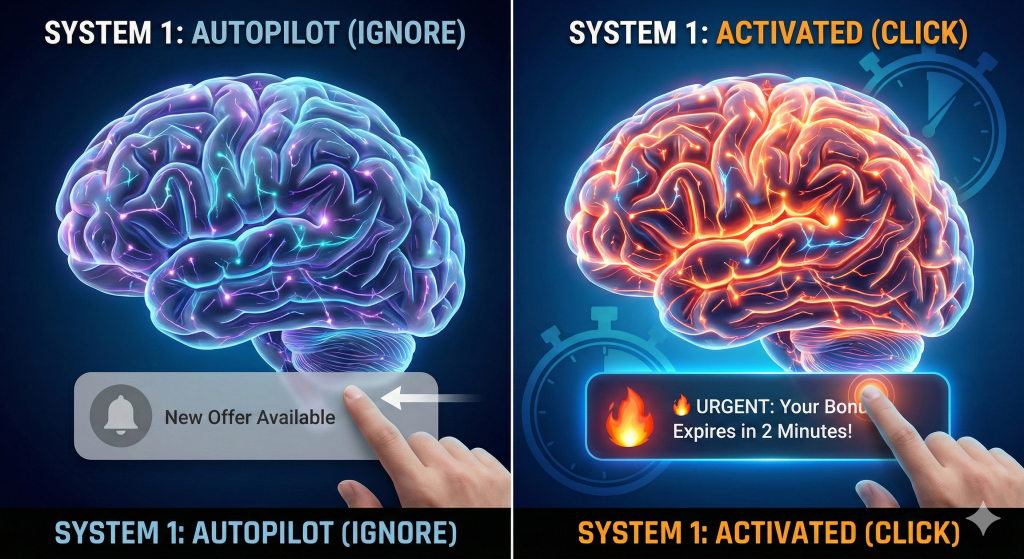
When a push appears on the screen, the user’s brain doesn’t process the text logically. Instead, it activates “System 1” (as defined by Daniel Kahneman)—the fast, intuitive, and emotional mode of thinking.
The reaction cycle looks like this:
- The Visual Anchor (0.1s): The eye catches the icon. If it’s boring or generic (like a standard Chrome icon), the brain is already preparing to swipe.
- The Headline Scan (0.3s): The brain searches for trigger words: “Money,” “Sex,” “Danger,” “Urgent,” “Personal.”
- The Motor Response (0.1s): If a trigger hits, the finger taps. If not—it swipes.
To pass this filter, we must exploit cognitive biases—”bugs” in human hardware—adapted specifically for the push format.
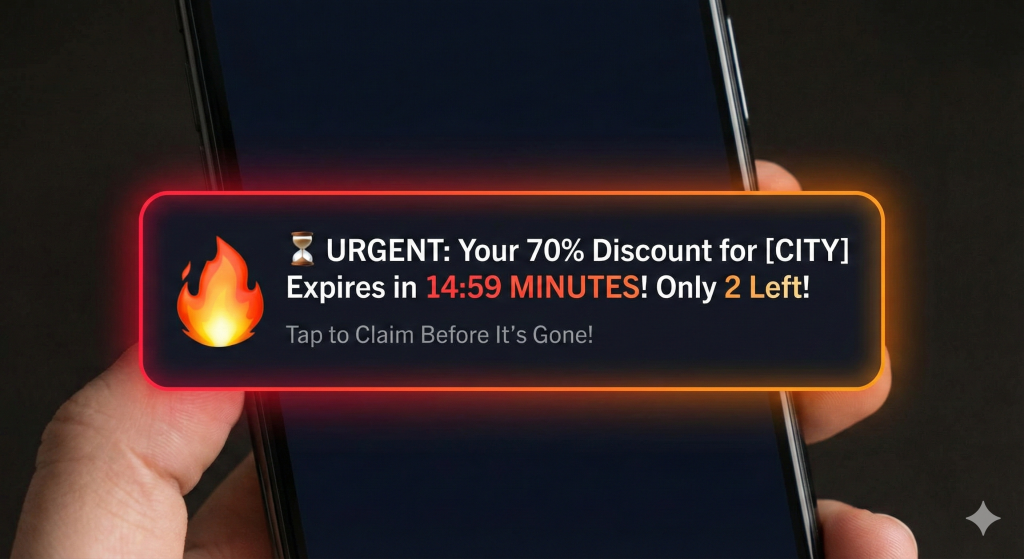
Trigger 1: Scarcity and FOMO (Fear of Missing Out)
Evolution has programmed us to fear the loss of a resource more than we value the gain of a new one. In push marketing, this is your most powerful weapon, though it is often misused.
The Brain Hack: “If I don’t click now, the opportunity is gone forever.” This creates a micro-burst of stress that can only be relieved by taking action (the click).
Push Adaptation:
- Don’t just say “Discount,” say “Expiring Discount.” Use timers in emojis or dynamic icons (⏳, 🔥).
- Local Scarcity. Not “Only 5 left,” but “Only 2 left in stock in [City].”
| The “Ignore” Way (Spam) | The “Trigger” Way (Effective) |
| 📢 Urgent! Claim your bonus now! (Ignored) | ⏳ Your personal bonus expires in 14 minutes. (Anxiety → Click) |
Trigger 2: The Novelty Effect and the Information Gap
The brain is a future-prediction machine. If it sees something familiar (yet another casino ad), it ignores it. If it sees something that doesn’t fit the pattern, it “wakes up” to evaluate the potential threat or reward.
The Brain Hack: Curiosity is an itch. George Loewenstein called this the “Information Gap”—the gap between what we know and what we want to know. The push should create the gap; the click should close it.
Push Adaptation:
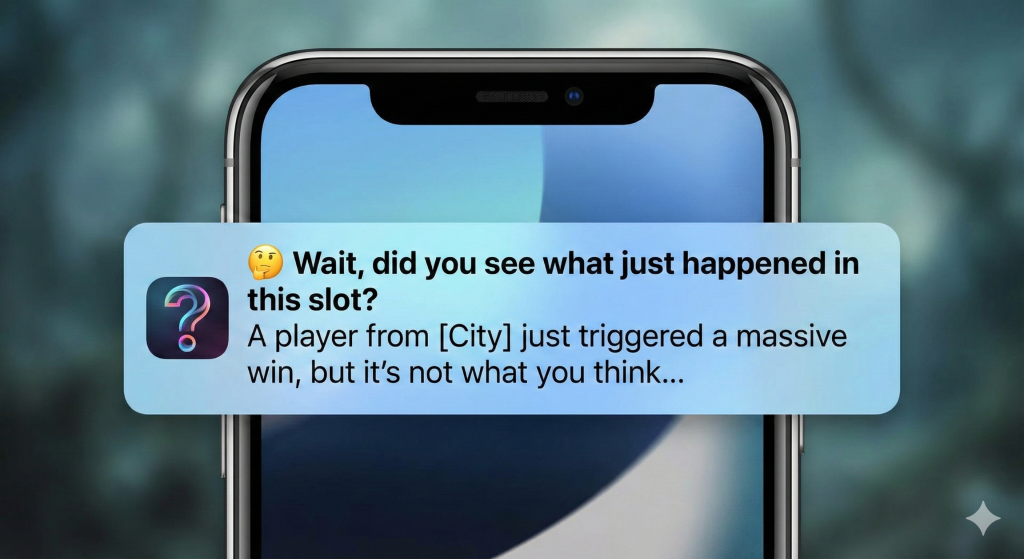
- Unfinished Sentences. Cut the text off at the most intriguing part.
- Abstract Icons. Instead of a logo, use a photo that makes the user ask, “What on earth is that?”
- Provocative Questions.
| The “Boring” Way | The “Curious” Way |
| 🎰 New slot available! Play now. | 🤔 Wait, did you see what just happened in this slot? (Intrigue → Click) |
Trigger 3: Ego and the “Cocktail Party Effect”
Even in a crowded, noisy room, you will instantly hear your own name. We are biologically tuned to react to anything that concerns us personally.
The Brain Hack: Personalization shifts a notification from the “Advertising Noise” category to the “Personal Message” category.
Push Adaptation:
- Using Macros. {City}, {Device_Model}, {OS_Version}—this is the baseline for 2026.
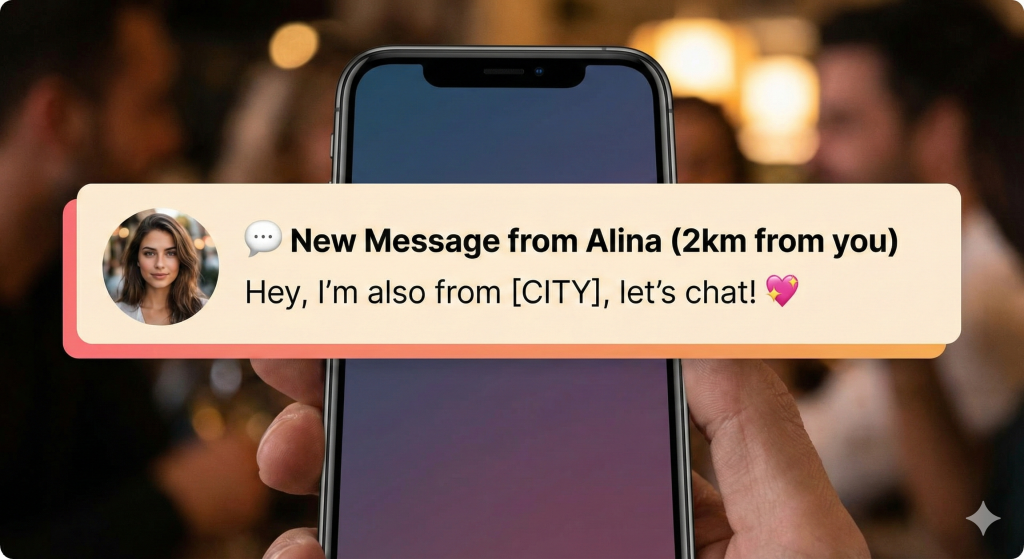
- Mimicking Social Interaction. In Dating, this is non-negotiable. The notification should look like a message from a real person, not a system update.
- Flattery. Validating the user’s status or exclusive access.
| The “Generic” Way | The “Personal” Way |
| 💖 Find your love today! | 💬 (1) New message from Alina (2km from you). (Ego → Click) |
| 📱 Download our app. | 📲 Exclusive version for [Device_Model] owners. (Exclusivity → Click) |
The Red Line: When Psychology Becomes Scam
In the hunt for high CTR, it’s easy to cross the line. In 2026, ad networks and OS platforms (iOS, Android, Chrome) strictly penalize system notification mimicry.
- The Forbidden Tactic: Using “Gear” icons or “Virus Warning” alerts with text like “System Damaged!”.
- Why it fails: This generates a massive CTR spike in the short term but destroys LTV (users bounce immediately once they realize they were tricked) and leads to instant account bans.
The Rule: Your push should intrigue, but never outright lie about its nature.
Final Verdict
A click on a push notification is a reflex, not a calculated decision. Your task as an affiliate is to be the stimulus that triggers that reflex.
Use scarcity to create urgency. Use novelty to pierce banner blindness. Use personalization to stroke the user’s ego. But remember: a click is only valuable if the landing page delivers on the promise.
FAQ
1. What makes a push notification compelling enough to click?
A compelling push notification combines urgency, personalization, and curiosity. Using clear, action-oriented language that speaks directly to user needs increases the likelihood of engagement.
2. How do psychological triggers influence user behavior in push notifications?
Triggers like FOMO (fear of missing out), social proof, scarcity, and novelty tap into human psychology, prompting users to take immediate action on notifications.
3. Should push notifications be personalized for better results?
Yes. Personalization—like using the user’s name, location, or past behavior—makes notifications feel relevant, increasing open and click-through rates significantly.
4. How often should push notifications be sent without annoying users?
Frequency depends on your audience, but a balance is key. Too many notifications can cause fatigue; too few may reduce engagement. Testing different cadences helps find the optimal schedule.
5. Can push notifications improve retention and engagement over time?
Absolutely. Strategically crafted notifications with psychological triggers encourage repeat visits, strengthen brand recall, and boost long-term user retention.