A Simple Analogy: The Stock Exchange (or a Farmers Market)
Imagine a massive marketplace.
There are Buyers (brands) walking around with shopping lists. They want to buy the best spots for their ads, but they want them cheap.
There are Sellers (website and app owners) who have “goods”—empty spaces for banners on their pages. They want to sell them for as much as possible.
And there is a Square where they meet to agree on a price.
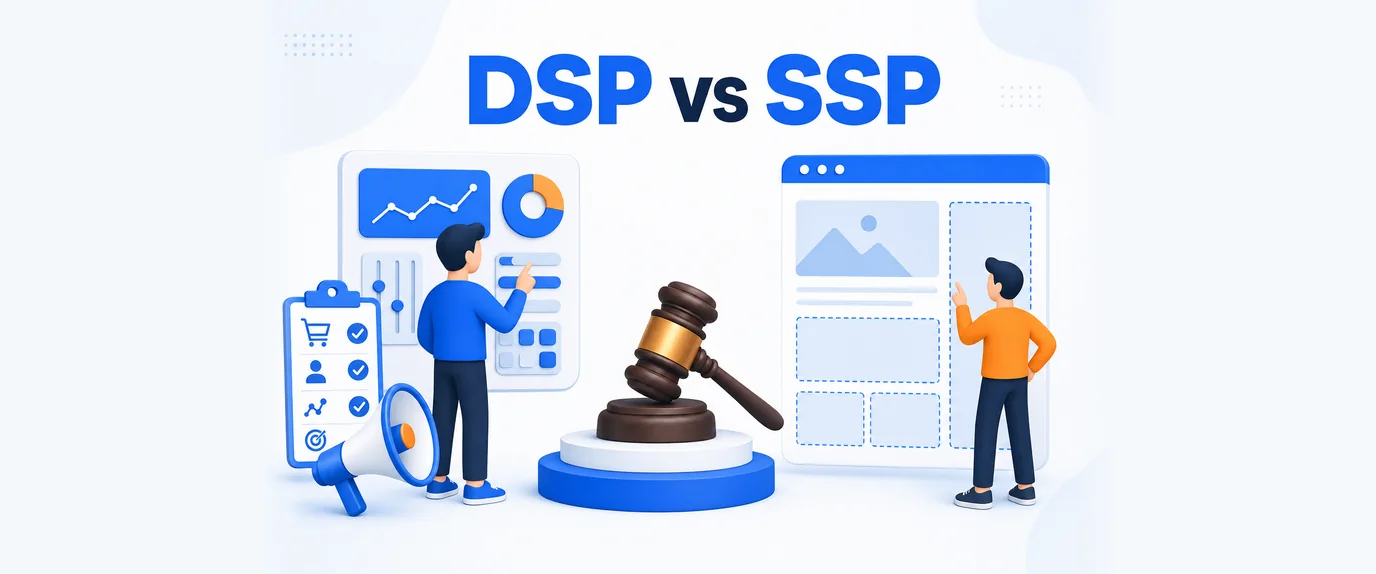
In the world of Programmatic advertising, these roles are played by three technologies: DSP, SSP, and Ad Exchange.
1. DSP (Demand Side Platform)
DSP is the “control panel” for the advertiser.
Imagine you own a sneaker brand. You don’t want to manually email the owners of 1,000 different websites asking, “Can I place a banner here?” That’s slow and inefficient.
Instead, you go to a DSP. This is software that automates ad buying.
Who is it for: Brands and advertising agencies.
Main Goal: To buy a target audience as cheaply and effectively as possible.
How it works: You upload your banners to the DSP and set your parameters: “I want to show ads to men aged 20-35 who are interested in sports, and the price per impression should not exceed $1.” The DSP searches for these people all over the internet and buys the impressions for you.
Examples of DSPs: Google Display & Video 360, The Trade Desk, Amazon DSP.
2. SSP (Supply Side Platform)
SSP is the tool for publishers (website owners).
Imagine you run a popular news portal. You have millions of visitors. You can’t personally negotiate with every single advertiser to fill all the ad spots on your site.
Who is it for: Owners of websites, apps, and streaming services.
Main Goal: To sell ad spots (inventory) for the highest possible price.
How it works: The SSP tells the market: “Look, I have an empty 240×400 banner slot, and right now a user (male, loves sports) has just visited the site. Starting price is $0.50. Who will bid more?”
Examples of SSPs: Google Ad Manager, PubMatic, Xandr (AppNexus), Magnite.
3. Ad Exchange — The Meeting Point
Ad Exchange is that “market square” where the DSP and SSP meet. It is a digital advertising marketplace.
There are no humans here, only algorithms. This is where the magic called RTB (Real-Time Bidding) happens.
Function: It receives data from the SSP (about the slot and the user), sends it out to various DSPs, collects the bids, and determines the winner.
Speed: The entire process takes about 100 milliseconds (faster than you can blink).
How It Works in Practice (The “Sneaker” Scenario)
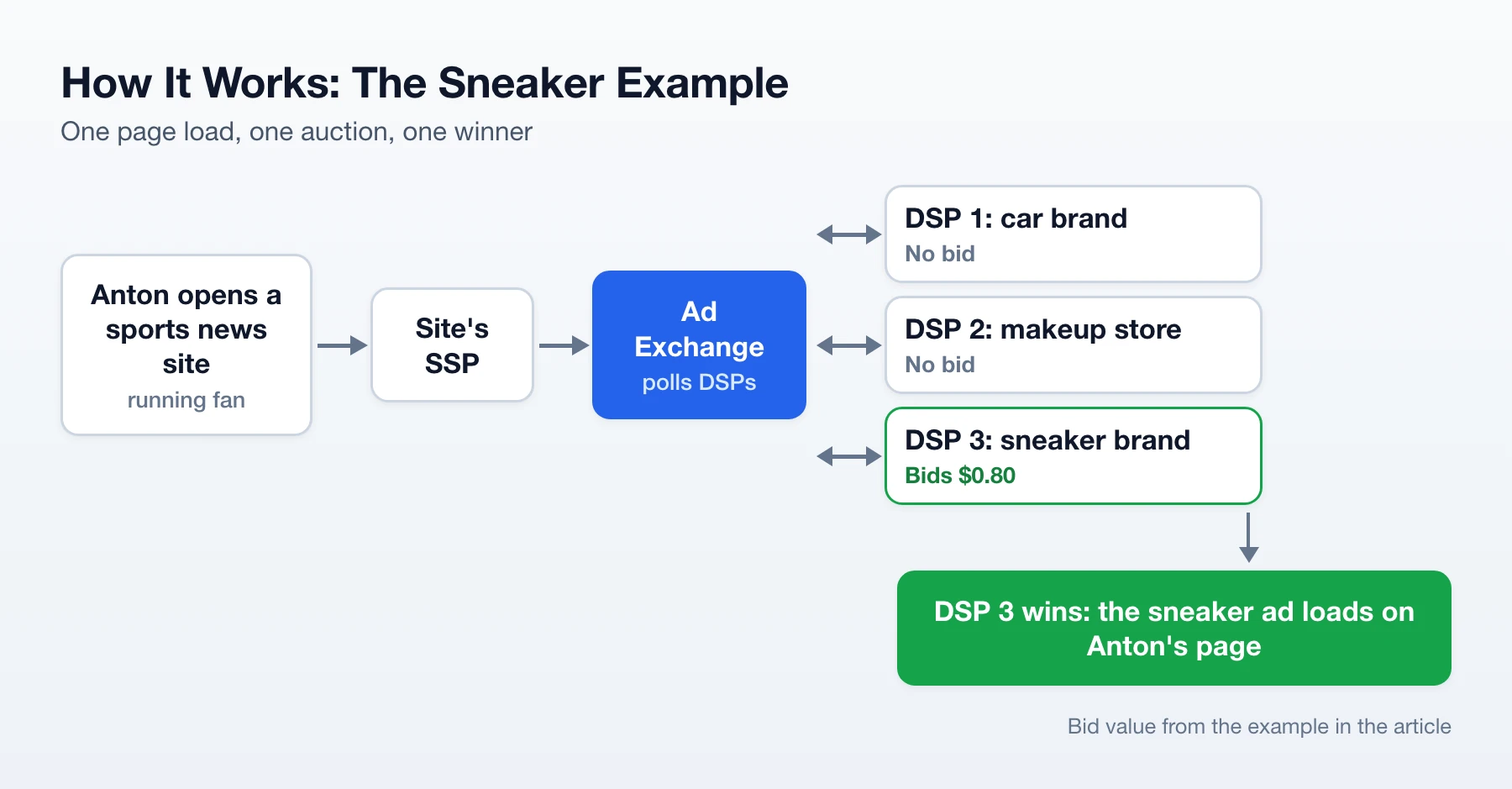
One page load, one auction: the exchange polls the DSPs and the only relevant bidder wins the impression.
Let’s put it all together in a story.
A User (let’s call him Anton, a running fan) visits a sports news website.
While the page is loading, the site’s SSP sends a signal to the Ad Exchange: “We have Anton here, he loves running. Who wants to show him an ad?”